 English
 Chinese
 Mongol
Redefining the construction industry with innovative solutions, cuttin-edge technology and sustainable practices
Redefining the construction industry with innovative solutions, cuttin-edge technology and sustainable practices
Profile Bending 2026-02-03
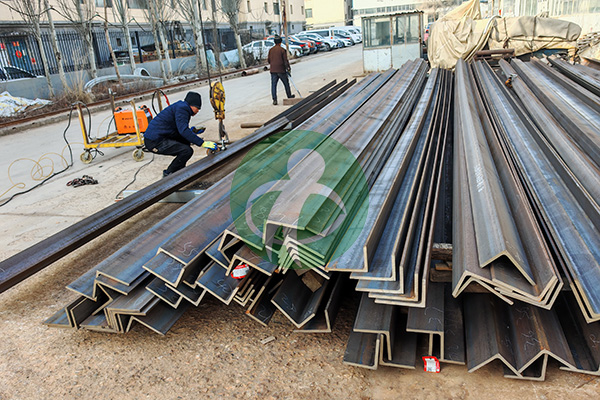
Angle steel, also known as L-shaped steel, is a fundamental structural component widely used in industrial construction, machinery, bridges, and various engineering projects. Its unique geometry offers strength, rigidity, and ease of assembly, making it a preferred choice for load-bearing structures. However, bending angle steel poses significant technical challenges due to its asymmetric cross-section and potential for deformation. Understanding precision bending techniques, material behavior, and quality control is crucial for ensuring both structural integrity and manufacturing efficiency.
1. Fundamentals of Angle Steel Bending
Bending angle steel involves plastic deformation under controlled force to achieve the desired geometry without compromising the steel’s mechanical properties. Several factors influence the bending process:
(1.Material properties
Steel type, yield strength, ductility, and thickness significantly impact bending performance. Low-carbon steels bend more easily, while high-strength steels require specialized techniques.
Understanding the stress-strain characteristics of the steel is critical to prevent cracking or distortion.
(2.Cross-sectional asymmetry
The L-shape causes uneven stress distribution during bending, which can result in twisting, buckling, or flattening if not properly supported.
(3.Bend radius
A minimum bend radius is required to prevent material fracture. Typically, the radius should be greater than the thickness of the steel leg, but precise calculations depend on steel grade and angle dimensions.
(4.Springback effect
After bending, the steel tends to partially return to its original shape due to elastic recovery. Accounting for springback is essential for precision bending.
2. Key Industrial Bending Techniques
There are several industrial techniques for bending angle steel, chosen according to project requirements, profile size, and bending precision:
(1.Press Brake Bending
The steel angle is placed on a die and pressed by a punch to achieve the desired bend.
Advantages: High accuracy, suitable for repeatable bends, and efficient for batch production.
Challenges: Requires careful die design to accommodate the asymmetric profile and prevent deformation.
(2.Roll Bending (Three-Roll Bending)
The angle steel passes through three rollers, gradually forming a smooth curve.
Advantages: Ideal for large-radius bends and long steel sections; produces uniform curvature.
Challenges: Limited use for sharp bends or tight angles; requires precise roller adjustments.
(3.Rotary Draw Bending
Angle steel is clamped to a rotating die that guides the bend.
Advantages: Excellent for tight radius bends and precise angles; reduces twisting and distortion.
Challenges: Slower for long sections and requires specialized machinery.
(4.Heat-Assisted Bending
High-strength or thick angle steels are preheated to increase ductility, making bending easier.
Advantages: Reduces cracking risk and allows tighter bend radii.
Challenges: Requires controlled heating to avoid altering steel properties and causing scaling.
3. Material Considerations
Proper material selection and preparation are essential to ensure quality bending:
(1.Steel grade
Low-carbon mild steels are easier to bend but may have lower strength.
Alloy or high-strength steels require higher force and precise bending methods.
(2.Surface condition
Rust, oil, or mill scale can affect bending quality and cause surface defects. Pre-cleaning or coating may be necessary.
(3.Leg dimensions and thickness
Unequal leg lengths or variable thicknesses require customized tooling and adjustments in bending parameters.
(4.Residual stresses
Previous welding, cutting, or forming operations may introduce residual stresses, affecting bending precision. Pre-straightening or stress-relief techniques can improve outcomes.
4. Equipment and Tooling
(1.Press brakes and punches
Custom V-dies or L-shaped dies are often used to match angle dimensions.
Adjustable backstops and supports prevent profile twisting.
(2.Roll bending machines
Equipped with adjustable rollers and bending speed control to manage material flow and maintain uniform curvature.
(3.Clamps and fixtures
Essential for supporting the angle steel during bending, preventing warping or lateral displacement.
(4.CNC-controlled systems
Modern bending machines utilize CNC for precision control, repeatability, and compensation for springback.
5. Quality Control and Inspection
Maintaining precision and structural integrity requires thorough inspection:
(1.Dimensional verification
Measuring angles, bend radius, and leg lengths with calipers, angle gauges, or laser scanners.
Ensures conformity to engineering drawings and specifications.
(2.Surface inspection
Check for cracks, scratches, or deformation. Polished or coated surfaces require careful handling.
(3.Mechanical testing
For critical components, perform tensile or bend tests to verify material strength has not been compromised.
(4.Documentation and traceability
Record bending parameters, steel batch numbers, and inspection results for quality assurance and reproducibility.
6. Applications of Bent Angle Steel
Bending angle steel enables a wide range of industrial applications:
Structural frames and supports: Used in machinery, storage racks, and industrial platforms.
Bridges and infrastructure: Curved angle steel provides reinforcement and aesthetic design.
Vehicle and equipment manufacturing: Custom bends allow integration into chassis, frames, and protective guards.
Architectural and interior design: Decorative elements, railings, and facades benefit from precise angle steel bending.
Industrial angle steel bending is a sophisticated process that combines material science, precision machinery, and skilled engineering. By selecting the appropriate bending technique—whether press brake, roll bending, rotary draw, or heat-assisted bending—and carefully considering material properties, equipment, and tooling, manufacturers can achieve high precision, structural integrity, and repeatability. Rigorous quality control, including dimensional checks, surface inspection, and mechanical testing, ensures that bent angle steel meets both design specifications and safety standards. From construction and machinery to vehicles and architecture, angle steel bending plays a vital role in industrial fabrication, enabling functional and aesthetically precise structures.