 English
 Chinese
 Mongol
Redefining the construction industry with innovative solutions, cuttin-edge technology and sustainable practices
Redefining the construction industry with innovative solutions, cuttin-edge technology and sustainable practices
Profile Bending 2026-01-26
As modern architecture continues to evolve, doors and windows are no longer treated as purely functional building components. They have become integral elements of architectural expression, contributing to both the performance and visual identity of a building. One technology that plays a key role in achieving this balance is door and window profile bending. By enabling curved, arched, and non-linear designs while maintaining structural integrity, profile bending significantly enhances both the aesthetics and functional performance of door and window systems.
1. Understanding Door and Window Profile Bending
Door and window profile bending refers to the controlled deformation of metal profiles—most commonly aluminum, but also steel or stainless steel—into curved or arched shapes without compromising their strength or surface quality. This process is carried out using specialized bending equipment and carefully calculated parameters such as bending radius, pressure, and material properties.
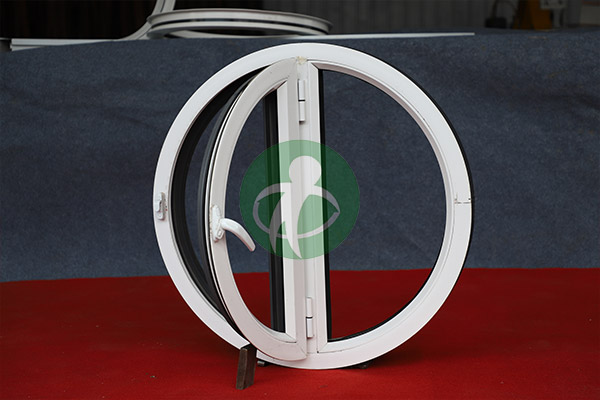
Unlike traditional straight profiles, bent profiles allow manufacturers to produce arched windows, curved sliding doors, circular frames, and irregular architectural openings. These elements are increasingly popular in contemporary residential, commercial, and public buildings.
2. Enhancing Architectural Aesthetics
One of the most immediate benefits of profile bending is its impact on design freedom and visual appeal.
2.1 Breaking Away from Rigid Geometry
Traditional doors and windows are dominated by straight lines and right angles. While functional, these shapes can feel repetitive and restrictive. Bent profiles introduce soft curves, flowing lines, and organic forms, allowing architects to create more dynamic façades and interior spaces.
Curved doors and windows are commonly used in:
Luxury residential villas
Hotels and resorts
Shopping malls and exhibition centers
Cultural and public buildings
These curved elements help buildings stand out while conveying elegance, fluidity, and modernity.
2.2 Seamless Integration with Curved Structures
Modern architecture often incorporates curved walls, glass façades, and circular atriums. Profile bending enables door and window systems to align perfectly with these structures, avoiding awkward transitions or excessive jointing. This seamless integration improves overall visual coherence and craftsmanship quality.
3. Improving Structural and Functional Performance
Beyond aesthetics, profile bending also contributes significantly to the performance of door and window systems.
3.1 Maintaining Structural Strength
Advanced bending techniques ensure that the internal structure of the profile remains intact during deformation. When executed correctly, bent profiles retain their load-bearing capacity and resistance to deformation, making them suitable for large openings and high-rise applications.
For aluminum profiles in particular, precise bending helps preserve:
Mechanical strength
Dimensional stability
Long-term durability
This ensures that curved doors and windows perform just as reliably as straight ones.
3.2 Enhanced Wind and Pressure Resistance
Curved frames can offer improved resistance to wind pressure, especially in large glass installations. The arch-like geometry distributes forces more evenly across the structure, reducing stress concentration at corners and joints. This is especially valuable in coastal areas or high-rise buildings exposed to strong winds.
3.3 Improved Sealing and Weather Performance
High-quality profile bending allows for precise matching between frames, glass panels, and sealing systems. As a result, curved door and window systems can achieve excellent:
Air tightness
Water resistance
Thermal insulation
This ensures energy efficiency and indoor comfort without sacrificing design complexity.
4. Precision Manufacturing and Quality Control
Achieving both performance and aesthetics through profile bending requires advanced manufacturing processes and strict quality control.
4.1 Material Selection
Different materials behave differently during bending. Aluminum alloys are particularly popular due to their lightweight nature, corrosion resistance, and excellent formability. Selecting the right alloy and profile thickness is essential to avoid cracking, wrinkling, or surface distortion.
4.2 Bending Techniques
Common techniques include:
Cold bending for high precision and surface quality
Roll bending for large-radius curves and long profiles
Controlled heating for thick or complex sections
Each method is chosen based on project requirements and performance standards.
4.3 Dimensional Accuracy
Modern CNC-controlled bending machines allow manufacturers to achieve millimeter-level accuracy. This precision is crucial for on-site installation, ensuring that curved frames fit perfectly with glass panels, walls, and hardware systems.
5. Applications in Modern Door and Window Systems
Profile bending has expanded the functional scope of door and window systems across multiple applications:
Curved sliding doors*for panoramic views and luxury interiors
Arched windows*that enhance classical or contemporary architectural styles
Circular or oval window frames*used as design focal points
Curved curtain wall interfaces*integrating doors and operable windows
These applications demonstrate how bent profiles bridge the gap between architectural creativity and practical engineering.
6. Long-Term Value and Market Advantages
From a commercial perspective, door and window profile bending offers long-term value for both manufacturers and end users.
Higher product differentiation: Curved systems stand out in a competitive market.
Increased project value: Customized curved doors and windows enhance property appeal.
Durability and low maintenance: Properly bent aluminum profiles resist corrosion and deformation over time.
As architectural demand shifts toward customization and visual impact, profile bending becomes a strategic advantage rather than a niche technique.
7. Future Trends in Profile Bending for Doors and Windows
Looking ahead, several trends are shaping the future of this technology:
Greater use of automation and CNC bending systems
Integration with energy-efficient and smart window technologies
Increased demand for large-span curved glass and ultra-slim profiles
Growth in sustainable and recyclable aluminum systems
These trends indicate that profile bending will continue to play a central role in next-generation building envelopes.
Door and window profile bending is no longer just a specialized fabrication process—it is a key enabler of modern architectural performance and aesthetics. By allowing curved designs without compromising strength, insulation, or durability, this technology empowers architects, manufacturers, and developers to push creative boundaries while meeting strict functional requirements.
As buildings become more expressive and performance-driven, profile bending will remain an essential solution for creating door and window systems that are both visually striking and technically reliable.