 English
 Chinese
 Mongol
Redefining the construction industry with innovative solutions, cuttin-edge technology and sustainable practices
Redefining the construction industry with innovative solutions, cuttin-edge technology and sustainable practices
Profile Bending 2026-02-13
In modern manufacturing and construction industries, precision is no longer a competitive advantage—it is a fundamental requirement. As product designs become more complex and structural demands more exacting, industrial profile bending has emerged as a critical process for producing accurately curved metal components. Industrial profile bending solutions enable manufacturers to transform straight metal profiles into precise, repeatable curved shapes while maintaining structural integrity, dimensional accuracy, and surface quality.
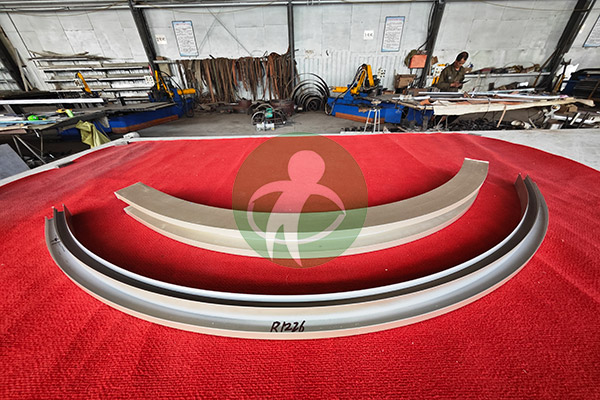
Industrial profile bending is a forming process used to bend metal profiles—such as tubes, pipes, angles, channels, beams, and custom extrusions—into predetermined radii or complex curves. Unlike simple manual bending, industrial-grade bending relies on advanced machinery, controlled force application, and precise tooling to achieve consistent results across a wide range of materials and cross-sections.
Precision is the defining factor that separates industrial profile bending from conventional forming methods. Even minor deviations in curvature, angle, or alignment can lead to assembly difficulties, structural weaknesses, or costly rework. Precision-formed metal components ensure:
Accurate fit within assemblies
Uniform load distribution in structural applications
Improved fatigue resistance and durability
Consistent visual appearance for architectural elements
Industrial profile bending solutions are designed to control deformation at every stage of the process, minimizing springback, distortion, and material stress.
Modern industrial profile bending relies on advanced equipment capable of handling diverse profiles and materials. Common technologies include:
Roll bending machines use a series of adjustable rollers to gradually form profiles into smooth, continuous curves. This method is ideal for large-radius bends and long components, offering excellent control and repeatability.
CNC technology allows precise control over bending parameters such as pressure, speed, and positioning. CNC profile bending ensures high accuracy, especially for complex geometries and tight tolerances required in precision applications.
For specialized profiles, custom-designed tooling is essential. Proper tooling supports the profile during bending, prevents collapse or flattening, and preserves cross-sectional geometry throughout the process.
A key strength of industrial profile bending solutions is their versatility across a wide range of materials, including:
Carbon steel and structural steel
Stainless steel
Aluminum and aluminum alloys
Copper and brass
High-strength and specialized alloys
Each material presents unique challenges related to elasticity, yield strength, and springback behavior. Professional bending solutions account for these factors through process optimization and material-specific bending strategies.
Industrial profile bending plays a vital role in numerous industries:
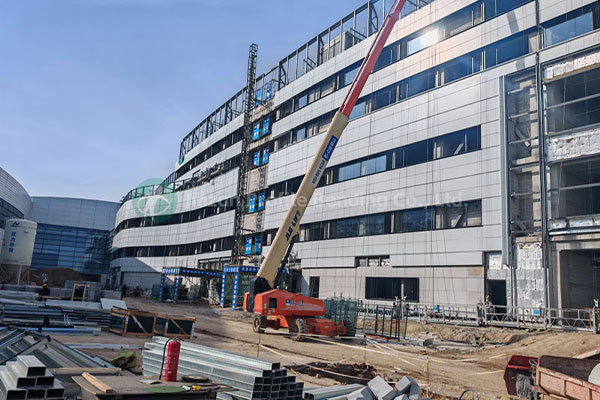
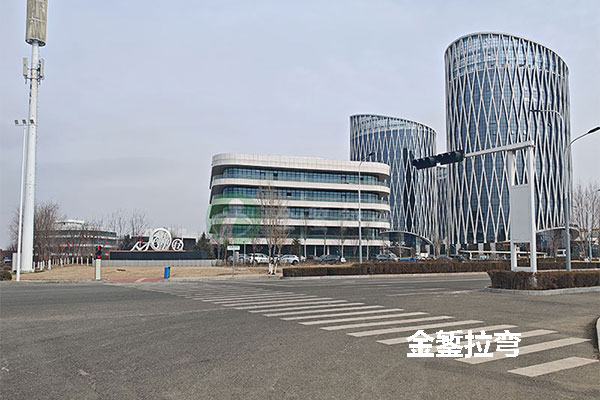
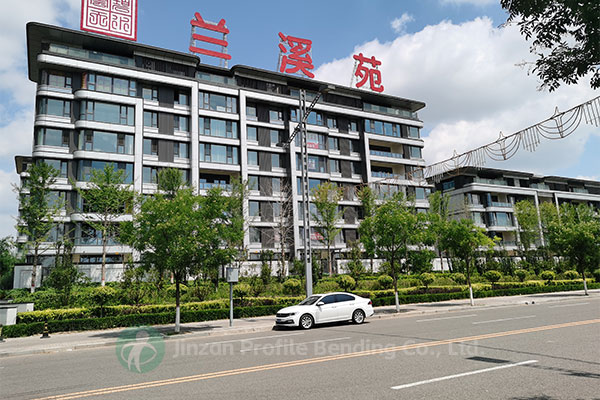
Curved beams, arches, handrails, and façade elements rely on precision bending to meet both structural and architectural requirements. Accurate bending ensures load-bearing performance while supporting modern design aesthetics.
In automotive, rail, and shipbuilding sectors, bent profiles are used in frames, supports, roll cages, and reinforcement components. Precision bending contributes directly to safety, performance, and weight optimization.
Energy and Industrial Equipment
Power plants, renewable energy installations, and industrial machinery often require curved pipes, frames, and support structures. Precision-formed components ensure reliable operation under high loads and harsh environments.
Architectural and Design Applications
Architectural metalwork demands exceptional surface quality and geometric accuracy. Industrial profile bending allows designers to realize complex curved forms without compromising strength or appearance.
Quality Control and Process Assurance
High-quality industrial profile bending solutions incorporate strict quality control measures throughout production. These typically include:
Dimensional inspection of bend radius and angles
Cross-section integrity checks
Surface finish evaluation
Repeatability and batch consistency verification
Advanced measuring tools and digital monitoring systems help ensure that every component meets specified tolerances and performance standards.
Advantages of Professional Profile Bending Solutions
Choosing professional industrial profile bending solutions offers several key benefits:
Consistency and repeatabilityacross large production runs
Reduced material wastethrough optimized forming processes
Shorter production cyclescompared to fabrication through welding or segmentation
Improved structural performancedue to continuous, uninterrupted profiles
These advantages translate into lower overall costs, higher product quality, and improved reliability.
Customization and Engineering Support
Modern profile bending is not limited to standard shapes. Leading providers offer customized bending solutions supported by engineering expertise, including:
Feasibility analysis for complex designs
Optimization of bend radii and tolerances
Prototyping and small-batch testing
Integration with downstream fabrication processes
This collaborative approach ensures that precision-formed components meet both design intent and practical manufacturing requirements.
Sustainability and Efficiency Considerations
Industrial profile bending also contributes to sustainable manufacturing practices. By forming components without cutting and welding multiple segments, the process reduces energy consumption, material waste, and structural weak points. Additionally, efficient bending processes support lightweight design strategies, helping reduce material usage without sacrificing strength.
Future Trends in Industrial Profile Bending
As industries continue to evolve, profile bending technology is advancing in parallel. Key trends include:
Increased use of automation and robotics
Integration of digital simulation for bend prediction
Enhanced CNC control for ultra-high precision
Expansion into complex, multi-radius and 3D bending
These developments will further enhance the accuracy, efficiency, and flexibility of industrial profile bending solutions.
Industrial profile bending solutions for precision-formed metal components are essential to modern manufacturing and construction. By combining advanced machinery, expert process control, and material-specific knowledge, these solutions enable the production of high-quality curved components that meet demanding technical and aesthetic standards.
As design complexity and performance requirements continue to increase, precision profile bending will remain a cornerstone technology—supporting innovation, efficiency, and reliability across a wide range of industrial applications.