 English
 Chinese
 Mongol
Redefining the construction industry with innovative solutions, cuttin-edge technology and sustainable practices
Redefining the construction industry with innovative solutions, cuttin-edge technology and sustainable practices
Profile Bending 2026-04-30
Metal bending is one of the most important processes in modern manufacturing and construction. It refers to the mechanical deformation of metal materials into a desired angle, curve, or shape without breaking or cutting the material. From building structures and automotive components to furniture and industrial machinery, metal bending plays a critical role in shaping the products we use every day.
Understanding how metal bending works requires knowledge of both the processes involved and the way different metals behave under force. This guide provides a clear overview of metal bending methods, material characteristics, and key factors that influence the final result.
1. What Is Metal Bending?
Metal bending is a forming process in which force is applied to a metal workpiece to change its shape along a straight axis. Unlike cutting or welding, bending does not remove material; instead, it permanently deforms it.
During bending, the outer surface of the metal is stretched while the inner surface is compressed. The center layer, known as the neutral axis, experiences minimal stress. This combination of tension and compression determines how the metal will behave and whether it can maintain structural integrity after deformation.
2. Common Metal Bending Processes
There are several widely used metal bending techniques, each suitable for different materials, thicknesses, and applications.
Press Brake Bending
One of the most common methods, press brake bending uses a punch and die system to apply controlled force to sheet metal. It is highly precise and widely used in industrial manufacturing.
Roll Bending
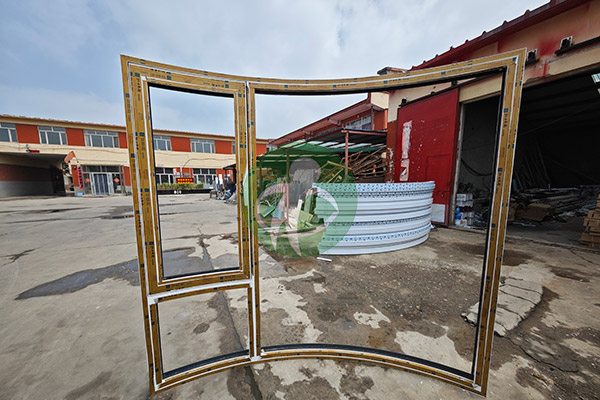
Roll bending uses a series of rollers to gradually form metal into curves or cylinders. This method is often used for pipes, tubes, and large curved structures.
Rotary Draw Bending
This technique is commonly used for tubes and pipes, especially in automotive and aerospace industries. It provides high precision and smooth curves without collapsing the material.
Free Bending (Air Bending)
In air bending, the metal is not fully pressed into the die, allowing for flexible angle control. It is efficient but requires careful calculation to avoid inaccuracies.
3. Material Behavior During Bending
Different metals respond differently to bending forces, and understanding material behavior is essential for achieving accurate results.
Elastic Deformation
At the beginning of bending, metal temporarily deforms but can return to its original shape if the force is removed. This is called elastic deformation.
Plastic Deformation
When force exceeds the material’s yield strength, permanent deformation occurs. This is the desired stage in metal bending.
Springback Effect
After bending, many metals partially return toward their original shape. This phenomenon is known as springback and must be compensated for during design and manufacturing.
Ductility and Strength
Highly ductile metals such as aluminum and mild steel are easier to bend. Harder metals require more force and may need heating or specialized equipment.
4. Factors That Affect Metal Bending Quality
Several factors influence the accuracy and quality of a bent metal part:
Material type and thickness: Thicker and harder metals require more force.
Bending radius: Tight bends increase the risk of cracking or deformation.
Tooling design: Proper die and punch selection ensures precision.
Grain direction: Metal grains affect flexibility and strength during bending.
Temperature: Some metals bend more easily when heated.
Careful control of these factors is essential to prevent defects such as cracking, wrinkling, or uneven bending angles.
5. Applications of Metal Bending
Metal bending is used in a wide range of industries:
Construction: structural frames, beams, and architectural elements
Automotive: exhaust systems, chassis parts, and body components
Aerospace: precision tubing and structural supports
Furniture: metal frames and decorative designs
Industrial machinery: equipment housings and support structures
Its versatility makes it a core process in both heavy industry and precision manufacturing.
Metal bending is a fundamental manufacturing process that transforms flat or straight metal into functional and structural components. By understanding the methods involved and how different materials respond to force, manufacturers can achieve high precision and durability in their products.