 English
 Chinese
 Mongol
Redefining the construction industry with innovative solutions, cuttin-edge technology and sustainable practices
Redefining the construction industry with innovative solutions, cuttin-edge technology and sustainable practices
Profile Bending 2026-04-16
Profile bending is a specialized metal forming process used to curve structural profiles—such as tubes, pipes, beams, channels, and extrusions—into precise shapes without compromising their structural integrity. By applying controlled force through rollers or dies, manufacturers can create consistent arcs, circles, spirals, or complex geometries tailored to specific design requirements. This capability makes profile bending an essential technique across multiple industries, particularly in architecture, automotive engineering, and industrial manufacturing.
Understanding Profile Bending and Its Value
At its core, profile bending allows straight metal sections to be reshaped into curved forms while maintaining strength and dimensional accuracy. Unlike cutting and welding multiple pieces to approximate a curve, bending produces a seamless structure with improved load distribution and aesthetics. It also reduces material waste and minimizes the need for additional joints, which can be weak points in structural systems.
Modern profile bending machines—such as three-roll and four-roll bending systems—offer high precision and repeatability. With CNC control, operators can achieve tight tolerances and consistent results, even for complex or large-scale components.
Applications in Architecture
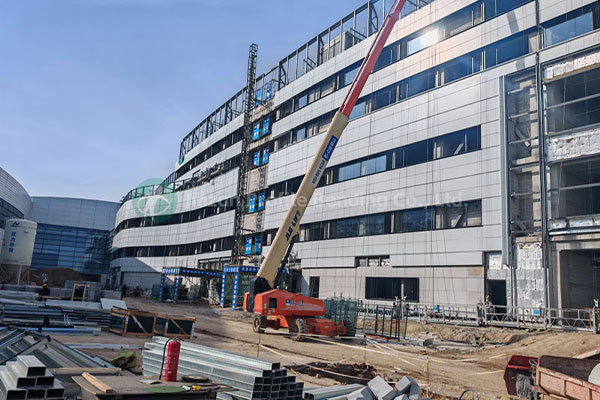
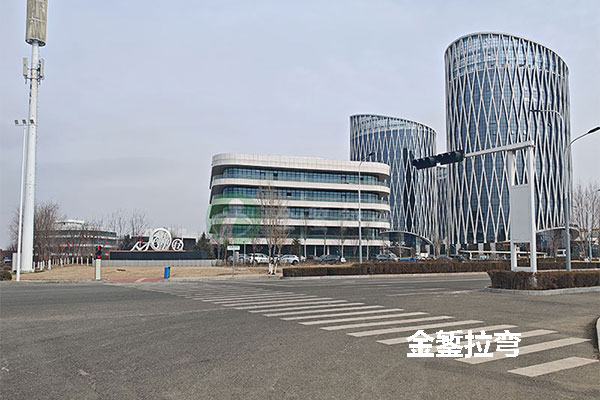
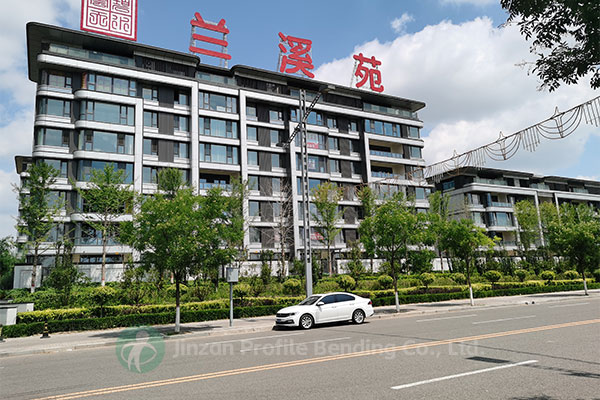
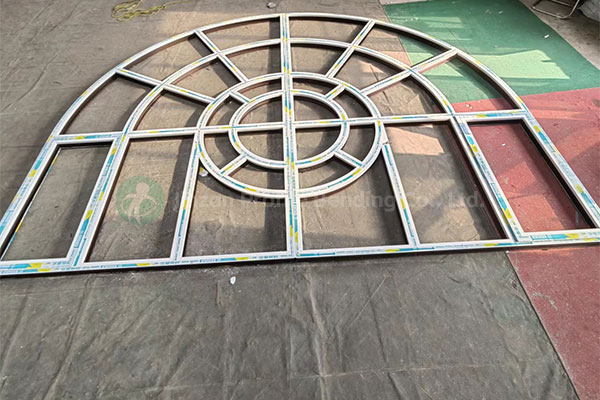
In architecture, profile bending plays a key role in turning creative concepts into physical structures. Contemporary building designs increasingly feature curves, arcs, and organic shapes, all of which rely on bent profiles.
One common application is in curtain wall systems. Aluminum or steel profiles used for façades often need to be curved to match the building’s design. Profile bending ensures these elements fit precisely while maintaining structural performance and weather resistance.
Handrails and balustrades are another example. Whether in staircases, balconies, or public walkways, curved metal railings enhance both safety and visual appeal. Profile bending allows these components to follow smooth, continuous lines without visible joints.
Roof structures and canopies also benefit from this process. Arched beams and curved supports are frequently used in stadiums, exhibition halls, and transportation hubs. These designs not only provide strength but also create open, visually striking spaces.
Additionally, decorative metal elements—such as sculptures, frames, and custom installations—often rely on profile bending to achieve unique artistic expressions.
Applications in the Automotive Industry
The automotive sector demands high precision, repeatability, and performance—areas where profile bending is particularly valuable. Many structural and functional components in vehicles require curved profiles.
Exhaust systems are a prime example. Pipes must be bent accurately to fit within limited space while ensuring optimal airflow and emissions performance. Profile bending enables smooth curves that reduce turbulence and improve efficiency.
Chassis and frame components also utilize bent profiles. Curved sections can enhance strength and distribute loads more effectively, contributing to vehicle safety and durability.
In addition, profile bending is used in the production of roll cages, seat frames, and support brackets. These components must meet strict safety standards, and precise bending ensures they perform reliably under stress.
Electric vehicles (EVs) have further increased demand for complex profile shapes, particularly in battery enclosures and lightweight structural elements. Aluminum profile bending, in particular, is widely used to reduce weight while maintaining strength.
Applications in Industrial Manufacturing
In industrial settings, profile bending supports a wide range of equipment and infrastructure needs. From machinery frames to piping systems, bent profiles are essential for both function and efficiency.
One major application is in conveyor systems. Curved sections allow materials to be transported smoothly around corners, optimizing factory layouts and workflow. Profile bending ensures these curves are precise and consistent.
In the energy sector, pipelines and structural supports often require bending to navigate terrain or fit within facilities. Whether in power plants, oil and gas operations, or renewable energy installations, bent profiles help achieve efficient and reliable designs.
Agricultural and construction equipment also rely on bent metal components. Frames, guards, and supports are often shaped to meet ergonomic and operational requirements.
Additionally, profile bending is widely used in the fabrication of storage tanks, silos, and pressure vessels. Curved steel sections form the basis of these structures, providing strength and durability under demanding conditions.
Advantages Across Industries
The widespread use of profile bending is driven by several key advantages:
Structural Integrity:Continuous curves eliminate weak joints, improving strength and load distribution.
Design Flexibility:Enables complex shapes that would be difficult or impossible with straight components.
Material Efficiency:Reduces waste and minimizes the need for additional processing.
Aesthetic Quality:Produces smooth, seamless curves that enhance visual appeal.
Cost Effectiveness:Streamlines production by reducing assembly steps and labor.
Profile bending is far more than a simple forming process—it is a critical enabler of modern design and engineering. From the sweeping curves of architectural landmarks to the precision components of automotive systems and the functional structures of industrial equipment, profile bending delivers both performance and versatility.
As technology continues to advance, with improved machinery and digital control systems, the applications of profile bending will only expand. For businesses seeking strength, efficiency, and design freedom, it remains an indispensable solution in today’s manufacturing landscape.