 English
 Chinese
 Mongol
Redefining the construction industry with innovative solutions, cuttin-edge technology and sustainable practices
Redefining the construction industry with innovative solutions, cuttin-edge technology and sustainable practices
Profile Bending 2026-05-14
Profile bending is an important metal fabrication process widely used in construction, transportation, machinery manufacturing, decoration engineering, aerospace, and many other industries. Through specialized bending equipment and processing technology, metal profiles can be shaped into curves, arcs, rings, or customized forms without significantly damaging the material structure. As industrial design standards continue to improve, profile bending has become essential for producing modern architectural structures and precision industrial components.
Different materials have unique physical properties, strength levels, corrosion resistance, and forming characteristics. Choosing the appropriate material directly affects bending quality, structural durability, production cost, and final application performance. Understanding the common materials used in profile bending and their industrial advantages helps manufacturers and engineering companies select more suitable solutions for different projects.
Aluminum is one of the most commonly used materials in profile bending due to its lightweight structure, corrosion resistance, and excellent formability. Aluminum profiles are widely used in curtain walls, doors and windows, rail transit systems, exhibition structures, and decorative engineering.
One major advantage of aluminum is its low density. Compared with steel, aluminum significantly reduces the overall weight of structures while maintaining good strength. This feature is especially important in industries such as aerospace, transportation, and high-rise building construction where weight reduction improves energy efficiency and structural performance.
Aluminum also has strong corrosion resistance because of its natural oxide layer. Even in humid or outdoor environments, aluminum profiles can maintain long-term stability with minimal maintenance requirements.
In addition, aluminum offers excellent bending flexibility. It can be formed into complex curves and customized shapes with relatively low risk of cracking or deformation. This makes aluminum highly suitable for modern architectural designs that require smooth curved appearances and creative structural forms.
Stainless steel is another popular material in profile bending applications, especially in industries requiring high strength and corrosion resistance. Stainless steel profiles are commonly used in chemical plants, food processing equipment, medical facilities, marine engineering, and decorative architecture.
The biggest advantage of stainless steel is its exceptional durability. It can withstand moisture, chemicals, extreme temperatures, and harsh environmental conditions without rusting easily. This allows stainless steel bent components to maintain long service life even in demanding industrial environments.
Stainless steel also provides excellent aesthetic value. Its smooth metallic surface creates a modern and professional appearance widely favored in commercial buildings, shopping centers, airports, and luxury interior decoration projects.
Although stainless steel has higher strength and hardness than aluminum, modern profile bending technologies can still achieve precise shaping results while maintaining structural integrity. Advanced bending equipment helps reduce surface damage and deformation during processing.
Furthermore, stainless steel requires relatively low maintenance after installation, reducing long-term operational costs for industrial and construction projects.
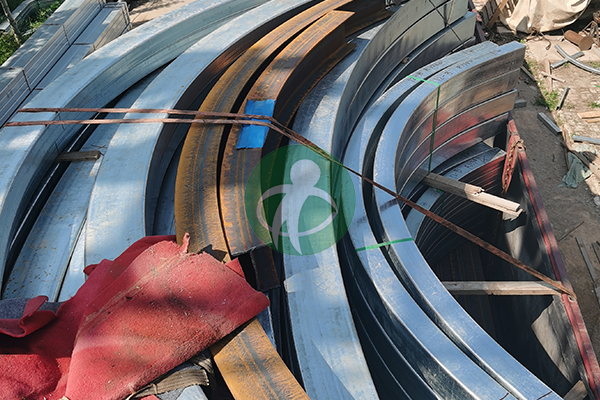
Carbon steel remains one of the most widely used materials in profile bending because of its high strength, affordability, and versatility. It is commonly used in bridges, heavy machinery, industrial equipment, steel structures, agricultural machinery, and automotive manufacturing.
One key advantage of carbon steel is its excellent load-bearing capacity. Bent carbon steel profiles can support large structural loads, making them ideal for heavy-duty engineering projects.
Carbon steel is also highly cost-effective compared with stainless steel and certain specialty alloys. For projects with strict budget requirements, carbon steel offers a practical balance between performance and production cost.
In addition, carbon steel can be welded, cut, and processed easily, allowing flexible manufacturing and assembly options. Surface treatments such as galvanizing, painting, or powder coating can further improve corrosion resistance and extend service life.
However, carbon steel may require additional protective coatings in outdoor or humid environments to prevent rust and corrosion over time.
Copper and brass are often used in specialized profile bending projects that emphasize decorative appearance and electrical conductivity. These materials are widely applied in artistic structures, luxury interiors, furniture manufacturing, lighting systems, and electrical equipment.
Copper has excellent electrical and thermal conductivity, making it suitable for industrial electrical applications. Its natural color and aging characteristics also create unique visual effects in architectural decoration.
Brass, which is an alloy of copper and zinc, offers attractive golden tones and strong corrosion resistance. It is frequently used in high-end decorative engineering and custom furniture production.
Both copper and brass possess relatively good ductility, allowing them to be bent into elegant curves and complex shapes with smooth surface finishes.
In advanced industrial sectors such as aerospace, defense, energy, and precision manufacturing, specialized alloy materials are often used for profile bending. These alloys may include titanium alloys, nickel alloys, and high-strength composite metals.
Titanium alloys provide extremely high strength-to-weight ratios and excellent corrosion resistance. They are commonly used in aircraft structures, medical devices, and high-performance engineering systems.
Nickel-based alloys can withstand extreme heat and chemical exposure, making them suitable for power plants, petrochemical facilities, and aerospace engines.
Although these materials offer superior performance, they are more difficult to process and typically require advanced bending technology and precise control systems.
Selecting the right material for profile bending depends on several important factors:
1. Application Environment
Environmental conditions such as humidity, temperature, chemical exposure, and outdoor weather directly affect material performance and durability.
2. Structural Requirements
Projects requiring high strength and load-bearing capacity may prefer carbon steel or specialized alloys, while lightweight structures may benefit from aluminum profiles.
3. Appearance Requirements
Architectural and decorative projects often prioritize surface finish, color, and visual appeal when selecting materials.
4. Budget and Production Cost
Material prices, processing difficulty, and maintenance costs all influence the final project budget.
5. Bending Complexity
Some materials are easier to bend into tight radii or complex shapes, while harder materials may require more advanced machinery and processing techniques.
Profile bending plays a critical role in modern industrial manufacturing and architectural engineering. Different materials offer unique advantages in terms of strength, flexibility, corrosion resistance, appearance, and cost efficiency.
Aluminum profiles are ideal for lightweight and decorative applications, stainless steel provides excellent durability and corrosion resistance, carbon steel delivers high structural strength at lower cost, while copper, brass, and specialty alloys meet the needs of customized and high-performance industries.
As profile bending technology continues to advance, manufacturers can achieve greater precision, improved efficiency, and more complex structural designs across a wide range of industries. Choosing the appropriate material remains one of the most important factors in ensuring product quality, long-term performance, and successful project execution.