 English
 Chinese
 Mongol
Redefining the construction industry with innovative solutions, cuttin-edge technology and sustainable practices
Redefining the construction industry with innovative solutions, cuttin-edge technology and sustainable practices
Profile Bending 2025-12-02
Steel bending is a critical process in modern manufacturing, construction, and industrial applications. Whether it is structural beams for buildings, automotive components, or machinery parts, the ability to produce precise, consistent curves in steel is essential for safety, performance, and aesthetics. Precision steel bending solutions are therefore increasingly sought after by manufacturers who require high-quality, reliable, and repeatable bending processes.
1. The Importance of Precision in Steel Bending
Steel bending is more than simply shaping metal; it involves carefully controlling the material properties, bend angles, radii, and overall geometry. Inaccurate bends can result in:
Structural weaknesses in construction beams
Poor fit in automotive assemblies
Operational inefficiencies in industrial machinery
Increased material waste due to scrap parts
For structural applications, the integrity of steel components directly affects building stability and safety. In the automotive industry, precise bends are crucial to ensuring vehicle components align correctly and meet performance standards. Industrial machinery often requires complex bends to fit within equipment layouts while maintaining strength and functionality. Precision in bending ensures that parts are dimensionally accurate and that assemblies function as intended.
2. Advanced CNC Steel Bending Technology
Modern precision steel bending relies heavily on advanced CNC (Computer Numerical Control) technology. CNC machines allow for highly controlled bending operations with minimal human error. Key advantages of CNC steel bending include:
High accuracy: CNC systems can achieve tight tolerances, ensuring each bend meets exact specifications.
Repeatability: Once a program is set, multiple identical parts can be produced consistently, reducing variability between components.
Complex curves: CNC technology enables multi-radius bends and complex geometries that would be difficult or impossible to achieve manually.
Reduced material stress: Controlled bending reduces the risk of cracks, surface deformations, or material fatigue.
By leveraging CNC machines, manufacturers can maintain quality standards, reduce scrap, and improve overall production efficiency. This is particularly valuable in industries where component consistency is critical.
3. Versatility Across Industries
Precision steel bending solutions serve a broad range of industries, each with unique requirements:
#Structural Applications
Beams, channels, and angles for construction projects require uniform curvature to ensure load-bearing capacity.
Custom architectural elements often demand specific bend profiles for aesthetic and functional purposes.
Steel bending ensures that beams, rails, and other structural components fit perfectly within a building’s framework.
Automotive frames, exhaust systems, chassis components, and suspension parts require precise bends to ensure proper assembly and performance.
Consistent bends contribute to the vehicle’s structural integrity and safety performance.
Complex tubing for fuel or hydraulic systems demands high-precision bends to prevent kinks and flow restrictions.
Machinery parts, conveyor components, and industrial piping require bends that accommodate specific equipment layouts.
Consistent curvature prevents misalignment, reduces operational wear, and ensures efficiency.
Precision bending allows for integration of steel parts in complex systems without extensive post-processing.
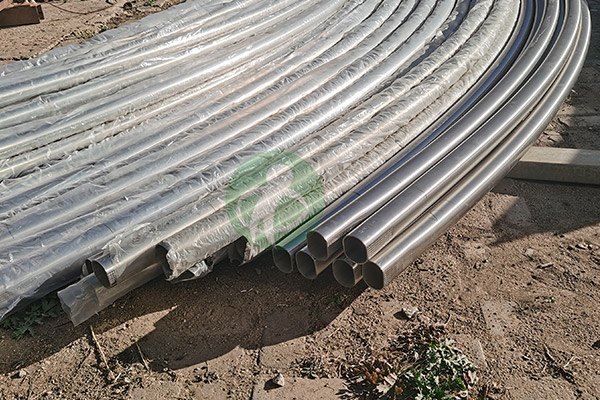
4. Material Considerations in Steel Bending
Successful steel bending requires careful consideration of material properties. Factors such as grade, thickness, and tensile strength influence how steel behaves during bending. Key considerations include:
Elasticity and springback: After bending, steel tends to spring back slightly. Advanced bending solutions account for this to achieve precise angles.
Thickness and cross-section: Thicker or heavier steel may require specialized equipment or multiple bending passes.
Surface finish: Smooth bends preserve surface quality and reduce the need for secondary finishing operations.
Heat treatment: Some steels may require pre-heating or post-bending treatments to maintain strength and prevent cracking.
Understanding these material characteristics allows manufacturers to select appropriate bending techniques, tooling, and machine parameters for optimal results.
5. Benefits of Precision Steel Bending Solutions
Implementing high-quality steel bending processes brings multiple advantages:
Enhanced structural integrity: Proper bends maintain steel strength, supporting safe and reliable structures or components.
Improved assembly efficiency: Accurate bends ensure that parts fit together without adjustments or corrections.
Cost reduction: Reduced scrap, rework, and material wastage lower overall production costs.
Aesthetic quality: Smooth, uniform bends improve the visual appeal of architectural or automotive components.
Scalability: CNC-controlled bending allows manufacturers to scale production while maintaining quality and consistency.
These benefits make precision bending a vital part of modern manufacturing strategies.
6. Quality Control and Inspection
Quality control is a critical component of precision steel bending. To ensure bends meet specifications, manufacturers typically employ:
Dimensional inspection: Measuring bend angles, radii, and lengths to confirm compliance with design requirements.
Non-destructive testing: Techniques such as ultrasonic or dye-penetrant inspection detect micro-cracks or structural anomalies.
Surface analysis: Ensuring bends are free from scratches, warping, or marks that could compromise appearance or performance.
Documentation: Recording process parameters and inspection results for traceability and regulatory compliance.
Robust quality control ensures that steel bending not only meets immediate project requirements but also maintains long-term reliability and performance.
7. Future Trends in Steel Bending
As manufacturing technologies evolve, steel bending is seeing innovations that improve precision, speed, and versatility:
Automation integration: Robotic bending systems enable faster production and reduced labor dependence.
Simulation software: Engineers can simulate bending processes digitally to optimize parameters and predict outcomes before production.
Hybrid bending techniques: Combining CNC bending with laser cutting, hydroforming, or press brake operations allows for more complex components.
Sustainability: Efficient bending reduces material waste and energy consumption, aligning with environmentally conscious manufacturing practices.
These advancements position precision steel bending as a continuously improving technology essential for modern industrial applications.
Precision steel bending solutions are indispensable for industries that demand accurate, consistent, and high-quality steel components. From structural engineering to automotive manufacturing and industrial machinery, precise bending ensures the integrity, functionality, and aesthetic quality of steel parts. Advanced CNC technology, combined with material expertise, quality control, and global application knowledge, enables manufacturers to meet increasingly complex requirements with confidence.
By investing in precision steel bending solutions, companies not only improve production efficiency and reduce costs but also enhance the reliability, safety, and performance of their final products. In today’s competitive landscape, mastering steel bending is a strategic advantage, allowing businesses to deliver exceptional quality and maintain a leading edge across diverse structural, automotive, and industrial applications.