 English
 Chinese
 Mongol
Redefining the construction industry with innovative solutions, cuttin-edge technology and sustainable practices
Redefining the construction industry with innovative solutions, cuttin-edge technology and sustainable practices
Profile Bending 2026-03-12
Industrial stretch forming processing is an advanced metal forming technique widely used in modern manufacturing. It is particularly effective for producing curved metal components with high precision and excellent surface quality. This process involves clamping a metal sheet or profile and stretching it while bending it over a forming die, allowing manufacturers to create complex curves while maintaining structural integrity. Because of its efficiency and accuracy, stretch forming has become an essential method in industries such as aerospace, automotive manufacturing, construction, and rail transportation.
One of the most significant technical advantages of industrial stretch forming processing is its ability to produce highly precise curved components. During the stretch forming process, the material is subjected to controlled tensile force while being shaped around a die. This tension reduces internal stresses and prevents wrinkling or distortion, resulting in a smooth and consistent curvature. Compared with traditional bending methods, stretch forming provides greater dimensional accuracy, making it ideal for applications that require strict tolerance control.
Another important advantage is the improvement in structural strength and stability. When metal is stretched during the forming process, the material structure becomes more uniform, and internal stress concentrations are minimized. This results in components that are not only accurately shaped but also stronger and more resistant to deformation. As a result, stretch-formed parts often demonstrate better load-bearing capacity and longer service life, which is particularly important in industries such as aerospace and heavy machinery.
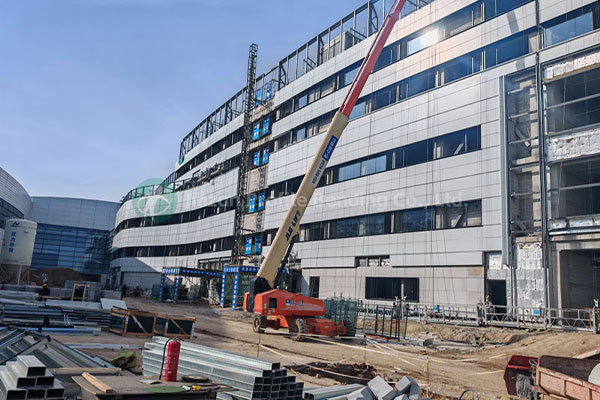
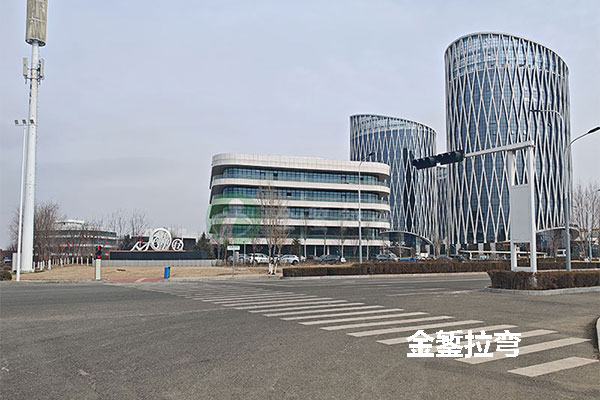
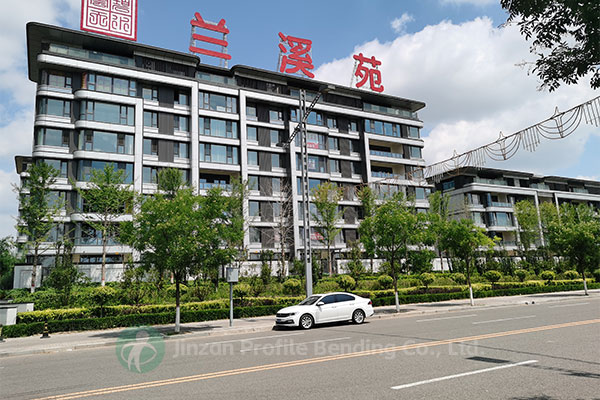
Industrial stretch forming processing is also well known for its ability to handle complex shapes and large-radius curves. Many modern architectural structures, aircraft fuselages, and transportation components require metal profiles with smooth, continuous curves. Traditional bending techniques often struggle to achieve such shapes without causing material defects. Stretch forming, however, allows manufacturers to produce large and complex curved profiles in a single operation, improving both efficiency and consistency.
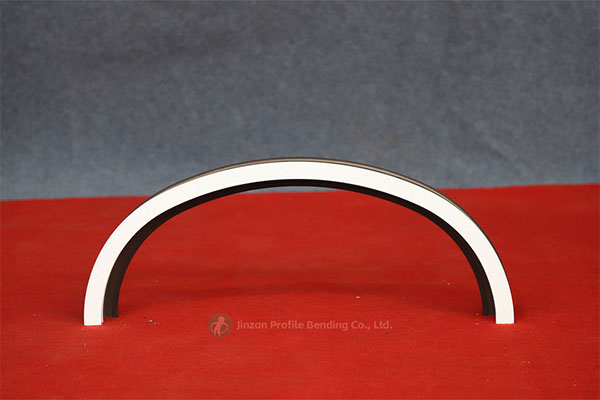
Another major advantage is the high-quality surface finish produced by the process. Because the material is stretched during forming, the surface remains smooth and free of wrinkles or buckling. This reduces the need for additional finishing processes such as grinding or polishing. In industries where appearance and aerodynamic performance are critical, such as aircraft manufacturing or architectural design, this advantage can significantly improve the overall quality of the final product.
Efficiency is another key benefit of industrial stretch forming processing. Once the forming die and equipment are properly set up, the process can produce large quantities of identical parts with consistent quality. This makes stretch forming highly suitable for mass production. In addition, modern stretch forming machines often incorporate automated control systems that improve operational efficiency and reduce human error, further enhancing production reliability.
Material utilization is also improved through stretch forming technology. Traditional forming processes may require multiple steps or result in material waste due to deformation defects. Stretch forming, by contrast, distributes stress evenly across the material, reducing the likelihood of cracks or excessive thinning. This helps manufacturers maximize material usage and reduce production costs, which is an important consideration in large-scale industrial production.
Flexibility is another notable advantage of this processing method. Stretch forming can be applied to a wide range of materials, including aluminum alloys, stainless steel, titanium alloys, and other high-strength metals. The ability to work with different materials makes it suitable for many industries and product types. For example, aluminum stretch forming is widely used in aerospace and transportation because it allows the creation of lightweight yet strong structural components.
In addition to its technical advantages, industrial stretch forming processing also contributes to improved product consistency. Because the forming process is controlled by specialized equipment and precise dies, each produced component maintains the same shape and dimensions. This consistency is particularly valuable in large engineering projects or manufacturing sectors where standardized parts are required.
In conclusion, industrial stretch forming processing offers numerous technical advantages, including high forming accuracy, improved structural strength, excellent surface quality, and the ability to create complex curved components. Its efficiency, material utilization, and compatibility with various metals make it a highly valuable technology in modern manufacturing. As industrial production continues to evolve and demand for precision components increases, stretch forming is expected to play an even more important role in shaping the future of metal processing industries.