 English
 Chinese
 Mongol
Redefining the construction industry with innovative solutions, cuttin-edge technology and sustainable practices
Redefining the construction industry with innovative solutions, cuttin-edge technology and sustainable practices
Profile Bending 2025-12-09
In modern manufacturing, industries such as construction, automotive, aerospace, rail transit, and industrial equipment increasingly rely on metal components with complex curved surfaces and high dimensional precision. Fine bending and drawing processing—often referred to as precision stretch-bending—has become a core technology in producing these components. Its advantages lie not only in smooth curves and high structural strength but also in its excellentbatch stability, allowing enterprises to achieve consistent dimensions across large production volumes.
By combining advanced CNC technology, optimized tool design, and strict process control, fine bending and drawing processing provides manufacturers with long-term reliability, improved assembly performance, and reduced production cost.
1. High Precision Forming: Ensuring Accuracy for Complex Curvature Profiles
Fine bending and drawing processing applies continuous and evenly distributed mechanical force to the material, allowing it to achieve precise curved shapes while minimizing deformation defects.
Key features include:
High curve accuracy — suitable for small-radius bends, large arc structures, and multi-angle transitions.
Controlled deformation — prevents issues such as wrinkling, folding, or internal stress concentration.
Improved part uniformity — ensures identical shapes across all produced elements.
The result is a forming process capable of meeting the structural and aesthetic requirements of high-end applications such as curtain wall frames, support beams, decorative arcs, automotive body components, and aerospace profiles.
2. Smooth Surface Quality Without Creases or Marks
Unlike traditional manual bending, which can leave tool marks or localized thickness variations, fine drawing and bending creates a smooth, uniform surface.
Benefits include:
No visible creases or dents, even in high-strength or thin-wall aluminum profiles
Reduced need for post-processing, such as sanding or straightening
Enhanced mechanical strength due to balanced stress distribution
This results in a final product that is both visually appealing and structurally reliable, suitable for exposed architectural components or precision mechanical parts.
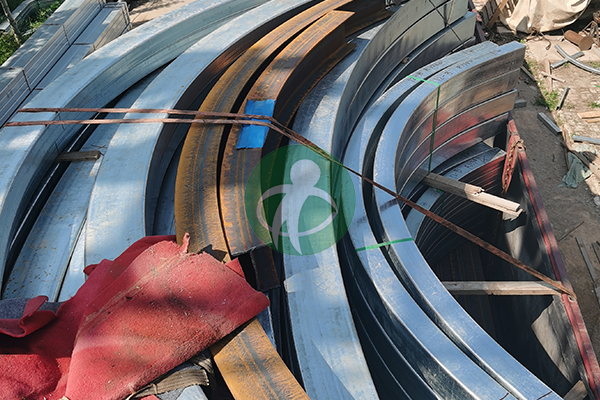
3. Stable Batch Processing: Ensuring Dimensional Consistency for Large Production Runs
One of the greatest advantages of fine bending and drawing processing is its ability to maintain extremely high dimensional consistency across thousands of parts.
Why batch consistency is so strong:
CNC-controlled bending trajectories ensure identical force application
Reusable digital tooling files maintain repeatability
Real-time measurement systems correct deviations instantly
Rigid fixtures lock profiles securely, eliminating movement during forming
For industries such as curtain wall fabrication and mass-production machinery, dimensional consistency is crucial for seamless assembly and reduced error rates. By ensuring uniformity, the process minimizes on-site adjustments and improves supply chain efficiency.
4. Adaptability to Multiple Materials and Profile Types
Fine bending and drawing processing is compatible with a wide range of materials and cross-section shapes, including:
Aluminum alloy profiles (6063, 6005, 6061, etc.)
Carbon steel and stainless steel tubes
Copper and titanium alloy components
Special custom-shaped industrial profiles
This versatility makes the process suitable for applications such as structural beams, vehicle frames, aircraft cabin components, lighting systems, and industrial pipelines.
5. CNC Intelligent Control for Higher Productivity and Accuracy
Modern bending equipment integrates digital control systems that automate the entire process, improving accuracy while reducing production time.
Key technological elements:
3D simulation and path prediction to avoid stress concentration
Automatic pressure adjustment to match material characteristics
Multi-axis synchronization for seamless forming of complex shapes
Digital recording of parameters to support traceability
These features enable factories to achieve higher efficiency, reduced labor dependency, and more consistent production outcomes.
6. Customized Process Solutions to Match Diverse Industrial Applications
Every industry has unique geometric, structural, and load-bearing requirements. Fine bending and drawing processing supportsfully customized solutions, including:
Curve radius optimization
Section deformation control
Strength retention analysis
Engineering design support
Tailored fixtures and toolings
Whether it is a modern building requiring large-span curved facade beams, or a transportation manufacturer needing precise structural elements, the process can be adapted to meet specific engineering expectations.
Fine bending and drawing processing has become an essential technology in modern metalworking, offering a powerful combination ofhigh precision, smooth surface quality, stable batch consistency, and advanced CNC control. Its ability to maintain dimensional reliability across large production volumes significantly improves manufacturing efficiency and reduces overall cost.
For industries pursuing high-quality structural components and visually refined curved designs, fine bending and drawing processing provides a reliable, scalable, and technologically advanced solution—setting a new standard for excellence in metal forming.