 English
 Chinese
 Mongol
Redefining the construction industry with innovative solutions, cuttin-edge technology and sustainable practices
Redefining the construction industry with innovative solutions, cuttin-edge technology and sustainable practices
Profile Bending 2025-12-16
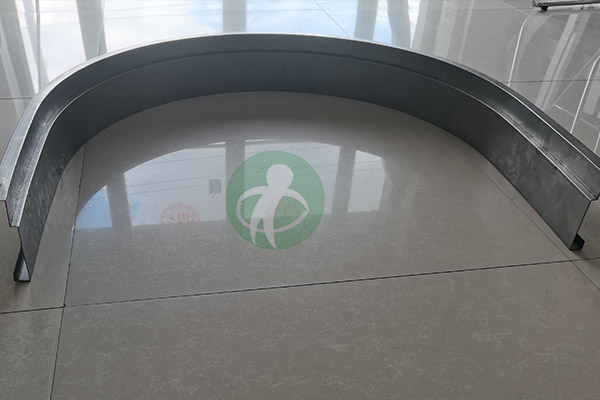
Profile bending is a critical metal forming process widely used in modern industrial production. By applying controlled tensile and bending forces to metal profiles such as aluminum, steel, and stainless steel, profile bending enables manufacturers to produce curved components with high precision, structural integrity, and aesthetic consistency. As architectural design becomes more complex, transportation systems expand, and equipment manufacturing demands higher performance, profile bending plays an increasingly important role across multiple industries, particularly in construction, rail transportation, and equipment manufacturing.
Profile Bending in the Construction Industry
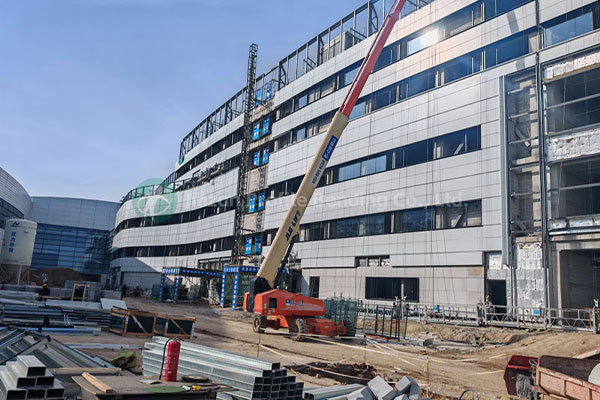
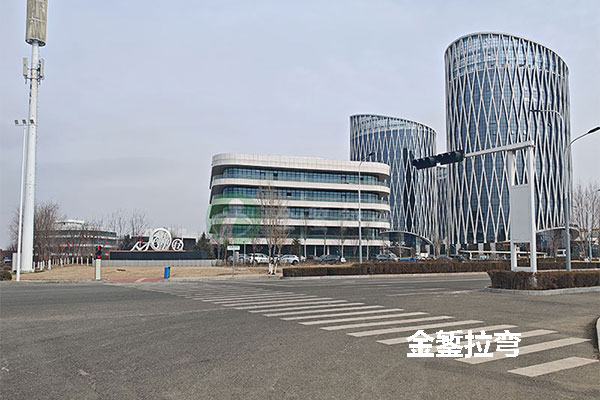
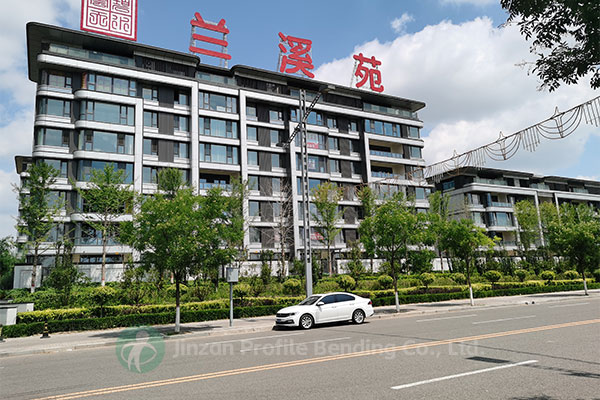
In the construction sector, profile bending is essential for achieving modern architectural designs that emphasize curved lines, large spans, and lightweight yet durable structures. Bent profiles are commonly used in curtain wall systems, doors and windows, skylights, canopies, façades, handrails, and decorative structures. Compared with traditional straight profiles joined by welding or segmentation, bent profiles provide smoother curves, better load distribution, and improved visual appeal.
From a structural perspective, profile bending allows architects and engineers to design components that follow natural force paths, enhancing strength while reducing material usage. Aluminum profile bending is especially popular in high-rise buildings and commercial complexes due to its light weight, corrosion resistance, and ease of surface finishing. Steel profile bending, on the other hand, is often applied in large-span roofs, exhibition halls, stadiums, and bridges, where high load-bearing capacity and long-term stability are required.
Additionally, profile bending supports prefabricated construction methods. Bent components can be produced in factories according to precise drawings, reducing on-site fabrication, shortening construction periods, and improving overall quality control. This makes profile bending a key technology for modern, efficient, and sustainable construction projects.
Application in Rail Transportation
Rail transportation systems, including high-speed railways, metro systems, trams, and light rail vehicles, rely heavily on profile bending technology. Bent profiles are widely used in car body frames, roof structures, side walls, doors, windows, handrails, and interior support components. These parts often require complex curves to meet aerodynamic, ergonomic, and safety requirements.
In rail vehicle manufacturing, aluminum profile bending is particularly important. Aluminum alloys help reduce vehicle weight, which directly improves energy efficiency, acceleration performance, and operating costs. Profile bending ensures that aluminum components maintain dimensional accuracy and mechanical strength while achieving the required curvature. Advanced bending techniques help minimize springback and deformation, ensuring tight tolerances and high consistency across mass production.
Infrastructure related to rail transportation also benefits from profile bending. Station canopies, noise barriers, platform screen doors, lighting structures, and safety fences often incorporate curved metal profiles for both functional and aesthetic purposes. By using profile bending instead of segmented welding, these structures achieve higher strength, better fatigue resistance, and a cleaner appearance.
Moreover, the reliability of profile bending contributes to long-term safety in rail systems. High-quality bent profiles reduce stress concentration points and improve the durability of components exposed to vibration, temperature changes, and continuous mechanical loads.
Role in Equipment Manufacturing
Equipment manufacturing covers a wide range of industries, including machinery, automation systems, energy equipment, medical devices, and industrial enclosures. In this field, profile bending is used to produce frames, brackets, guards, housings, support arms, and structural components that require both strength and precise geometry.
Bent profiles allow equipment designers to optimize space utilization and structural performance. Curved frames can enhance rigidity while reducing weight, which is especially valuable for mobile equipment, robotic systems, and compact machinery. Profile bending also supports modular design concepts, enabling manufacturers to standardize components while adapting shapes to different applications.
In heavy equipment manufacturing, steel profile bending is often applied to create load-bearing frames, protective structures, and reinforcement components. For precision equipment and clean-room applications, stainless steel and aluminum bent profiles are preferred due to their corrosion resistance, cleanliness, and surface finish quality.
Another key advantage of profile bending in equipment manufacturing is process efficiency. Compared with cutting and welding multiple straight segments, bending a single profile reduces the number of joints, lowers labor costs, and improves structural integrity. This leads to more reliable equipment, longer service life, and reduced maintenance requirements.
Technical Advantages and Development Trends
Across all three industries, profile bending offers several technical advantages. It ensures smooth, continuous curves, minimizes material waste, and maintains the original mechanical properties of the profile. Modern profile bending equipment, combined with digital control systems, allows for high repeatability, tight tolerances, and customization according to complex design requirements.
As industries continue to pursue lightweight structures, energy efficiency, and advanced aesthetics, the demand for high-precision profile bending is expected to grow. The integration of CNC bending technology, simulation software, and automated quality inspection further enhances production accuracy and reduces development cycles.
Profile bending has become an indispensable manufacturing process in construction, rail transportation, and equipment manufacturing. It supports innovative design, improves structural performance, and enhances production efficiency across diverse applications. By enabling precise, reliable, and cost-effective curved components, profile bending not only meets current industrial demands but also contributes to the future development of modern infrastructure, transportation systems, and advanced equipment manufacturing.
As technology continues to evolve, profile bending will play an even more important role in shaping durable, efficient, and visually refined industrial solutions.