 English
 Chinese
 Mongol
Redefining the construction industry with innovative solutions, cuttin-edge technology and sustainable practices
Redefining the construction industry with innovative solutions, cuttin-edge technology and sustainable practices
Profile Bending 2026-01-15
As modern architecture continues to evolve toward more expressive, functional, and sustainable designs, the demand for curved and customized structural elements has increased significantly. Plastic steel bending—commonly applied to PVC and reinforced plastic profiles—has become a critical manufacturing process that enables architects, designers, and construction professionals to achieve complex curved forms while maintaining structural integrity and cost efficiency. This article explores how plastic steel bending solutions support customized architectural profiles and curved structural designs across a wide range of applications.
Understanding Plastic Steel Bending Technology
Plastic steel bending is a specialized processing method that reshapes straight PVC or plastic steel profiles into curved, arched, or circular forms. By applying controlled heat, mechanical force, or a combination of both, the material is gradually bent without cracking, deformation, or loss of performance.
Unlike traditional metal bending, plastic steel bending requires precise temperature control and specialized tooling to preserve material strength, surface finish, and dimensional accuracy. The result is a curved profile that maintains the same functional properties as its straight counterpart, including durability, insulation performance, and resistance to environmental stress.
Meeting the Demand for Customized Architectural Profiles
Modern architectural design increasingly emphasizes individuality and visual impact. Standard straight-line components often limit creative expression, especially in projects that involve curved façades, arched windows, or flowing interior forms. Plastic steel bending allows architects to move beyond these limitations.
Customized profiles can be produced according to specific radius requirements, angles, and geometries. This flexibility makes it possible to create unique door and window frames, curved curtain wall elements, and architectural accents that seamlessly integrate with the overall design concept. By enabling precise customization, plastic steel bending supports architectural innovation while maintaining consistency and quality.
Applications in Curved Structural Designs
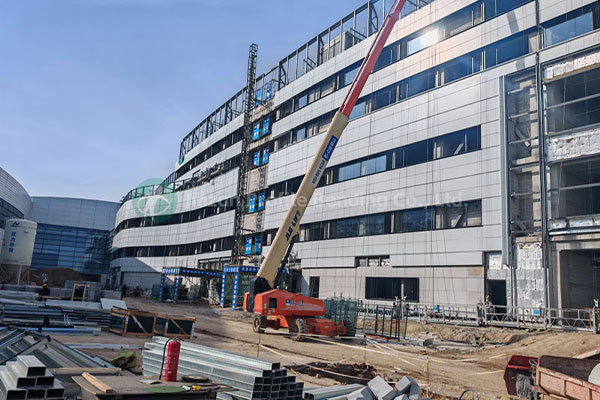
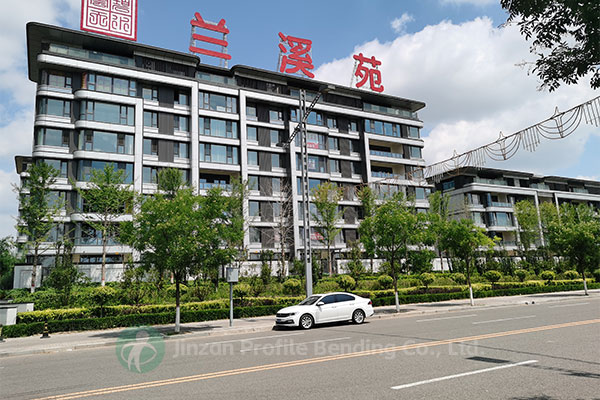
Plastic steel bending solutions are widely used in both exterior and interior architectural applications. In building façades, curved PVC profiles are commonly applied to arched windows, rounded balconies, and curved skylights, enhancing both aesthetic appeal and functional performance.
In interior design, plastic steel bending plays an important role in curved partitions, decorative frames, and ceiling structures. These applications benefit from the material’s lightweight properties, ease of installation, and compatibility with modern construction systems.
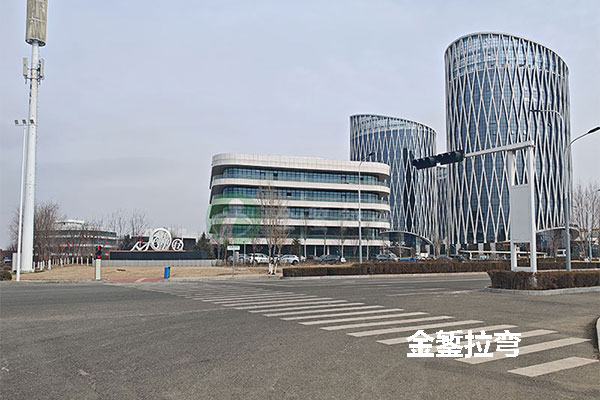
Additionally, curved plastic steel components are often used in public buildings, commercial spaces, and transportation facilities where smooth lines and dynamic forms contribute to a modern, welcoming environment.
Structural Stability and Performance Advantages
One of the key advantages of plastic steel bending solutions is the ability to maintain structural stability despite complex shaping. Advanced bending techniques ensure that internal reinforcements remain properly aligned and that material thickness is preserved throughout the curve.
Plastic steel profiles are known for their resistance to moisture, corrosion, and temperature variation. When properly bent and processed, these characteristics remain intact, making them suitable for long-term use in diverse climates and environmental conditions.
The dimensional accuracy achieved through professional bending processes also ensures tight tolerances during installation, reducing the risk of gaps, misalignment, or structural stress.
Integration with Multi-Material Architectural Systems
Plastic steel bending solutions are particularly valuable in projects that integrate multiple materials such as glass, aluminum, steel, and wood. Curved plastic steel profiles can be precisely matched with glass panels or metal frames, creating seamless transitions between materials.
This compatibility supports modern architectural trends that combine transparency, strength, and warmth within a single design. The ability to bend plastic steel profiles to exact specifications ensures that each component fits perfectly within the overall structural system, improving construction efficiency and visual coherence.
Improving Construction Efficiency and Cost Control
From a construction perspective, factory-processed plastic steel bending significantly reduces on-site workload. Curved components are delivered ready for installation, minimizing the need for field modifications and reducing labor time.
This prefabrication approach improves project scheduling and cost control. By eliminating trial-and-error adjustments during installation, builders can achieve higher productivity and more predictable outcomes. Additionally, plastic steel materials are generally more cost-effective than custom-shaped metal alternatives, offering a balance between performance and budget considerations.
Sustainability and Environmental Considerations
Sustainability is a growing priority in the construction industry, and plastic steel bending aligns well with environmentally responsible building practices. PVC and plastic steel materials offer long service life, low maintenance requirements, and strong thermal insulation properties.
Curved plastic steel profiles contribute to energy-efficient building envelopes by supporting airtight window and door systems. Their durability reduces the need for frequent replacement, minimizing material waste over time. In many cases, these materials are also recyclable, further enhancing their environmental profile.
Quality Control and Precision Manufacturing
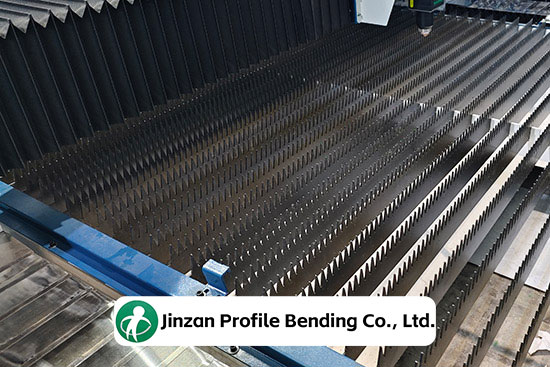
High-quality plastic steel bending relies on advanced equipment, experienced technicians, and strict quality control processes. Precision molds, controlled heating systems, and gradual bending techniques ensure that each profile meets design specifications without compromising performance.
Before mass production, sample testing and trial bending are often conducted to verify curvature accuracy, surface quality, and structural reliability. This systematic approach ensures consistent results across large-scale projects and provides confidence for architects and contractors alike.
Supporting Architectural Creativity and Future Design Trends
As architectural design continues to move toward more organic forms and customized structures, plastic steel bending solutions will play an increasingly important role. The ability to produce complex curves while maintaining performance, efficiency, and affordability makes this technology well-suited for future building trends.
From residential projects to large commercial developments, plastic steel bending empowers designers to transform creative concepts into practical, buildable solutions. By bridging the gap between aesthetic ambition and technical feasibility, it supports the ongoing evolution of modern architecture.
Plastic steel bending solutions provide a reliable and versatile approach to creating customized architectural profiles and curved structural designs. Through precise processing, strong material performance, and seamless integration with other building systems, these solutions meet the growing demand for innovation in contemporary architecture.
By enhancing design flexibility, improving construction efficiency, and supporting sustainable building practices, plastic steel bending has become an essential technology for architects, designers, and construction professionals seeking high-quality curved architectural elements. As design expectations continue to rise, plastic steel bending will remain a key driver in shaping the built environment of the future.