 English
 Chinese
 Mongol
Redefining the construction industry with innovative solutions, cuttin-edge technology and sustainable practices
Redefining the construction industry with innovative solutions, cuttin-edge technology and sustainable practices
Profile Bending 2026-08-31
Custom metal profiles are widely used in construction, transportation, machinery, architecture, energy, and industrial manufacturing. When standard straight profiles cannot meet a project’s design or structural requirements, profile bending provides an efficient way to create curved, angled, and customized shapes.
With the right bending process, manufacturers can produce metal profiles with consistent dimensions, smooth curves, and reliable structural performance. From simple arcs to complex radius designs, professional profile bending solutions can help turn standard metal sections into components tailored to specific applications.
What Is Profile Bending?
Profile bending is a metal forming process used to permanently curve or shape structural profiles without cutting and welding multiple sections together. Depending on the material, profile geometry, thickness, and required radius, different bending methods can be used.
Common profiles suitable for bending include:
H-beams and I-beams
Angle profiles
Channel sections
Flat bars
Square and rectangular tubes
Round tubes and pipes
Aluminum and stainless steel profiles
Special custom extruded profiles
The objective is not simply to bend a piece of metal. A professional profile bending process must control the bending radius, dimensional accuracy, material deformation, and surface quality throughout production.
Why Choose Custom Profile Bending?
One of the main advantages of custom profile bending is design flexibility. Engineers and designers can create curved structures that would be difficult or expensive to manufacture using conventional fabrication methods.
Instead of producing a curved component from multiple straight pieces, bending a single profile can reduce the number of joints and welding operations. This can simplify fabrication while creating a cleaner appearance.
Custom bending can also help improve production efficiency. When the correct bending equipment and process parameters are selected, large quantities of profiles can be processed with repeatable results.
For architectural projects, curved metal profiles can provide distinctive visual effects. In industrial applications, precisely bent profiles can be integrated into frames, supports, rails, machine structures, and other components.
Common Profile Bending Methods
Different projects require different bending technologies. Selecting the right method is essential for achieving the desired result.
Roll Bending
Roll bending is one of the most commonly used methods for forming metal profiles. The profile passes through a series of rollers that gradually apply pressure and create the required curvature.
Because deformation is introduced progressively, roll bending is suitable for producing large-radius curves and long components. It can be used with various structural profiles and is widely applied in industrial fabrication.
Press Bending
Press bending uses a controlled force to deform the profile into a specific shape. It can be useful when a project requires localized bending or a particular angle.
The tooling and machine configuration must be carefully selected according to the profile dimensions and material characteristics. Incorrect settings may result in excessive deformation or dimensional variation.
Rotary Draw Bending
Rotary draw bending is often used for tubes and profiles where accurate and repeatable curves are required. The material is drawn around a bending die to create a controlled radius.
This method is especially useful for applications where appearance, dimensional consistency, and tight bending requirements are important.
Materials Used in Profile Bending
Profile bending can be performed on a variety of metals, but each material behaves differently during forming.
Carbon steel is commonly used for structural and industrial applications because of its strength and versatility. Depending on the grade and profile geometry, it can be bent using several forming methods.
Stainless steel offers corrosion resistance and a clean appearance, making it popular in architectural, food-processing, transportation, and industrial applications. Its higher strength and work-hardening characteristics may require careful process control.
Aluminum is lightweight and relatively easy to fabricate, making it suitable for transportation, architecture, and equipment applications. However, different aluminum alloys have different forming characteristics, so the bending process should be selected accordingly.
Material thickness, hardness, cross-sectional shape, and mechanical properties all influence the final bending result.
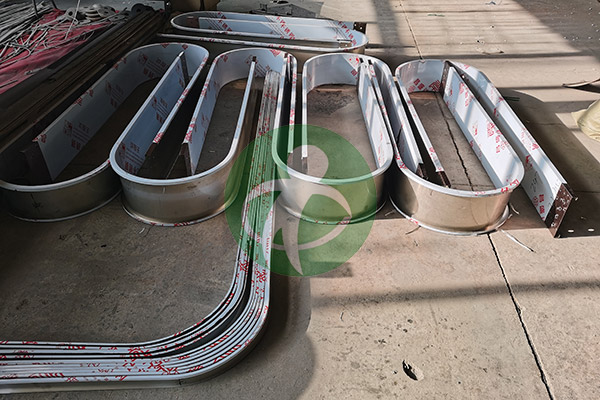
Factors That Affect Bending Quality
Producing a high-quality custom metal profile requires more than selecting a bending machine. Several factors need to be considered before production begins.
Profile Geometry
The shape and dimensions of the profile directly affect how it responds to bending. Hollow sections, asymmetric profiles, and complex cross-sections may require specialized tooling or process parameters.
Bending Radius
The required radius is one of the most important design considerations. A smaller radius generally creates greater deformation and may increase the risk of wrinkling, cracking, distortion, or local buckling.
Material Properties
Yield strength, tensile strength, ductility, and work-hardening behavior all influence the bending process. Understanding the material characteristics helps manufacturers determine appropriate equipment settings and forming methods.
Springback
After bending force is removed, metal may partially return toward its original shape. This phenomenon is known as springback.
Experienced manufacturers compensate for springback by adjusting machine settings, tooling, or bending angles. Proper compensation is particularly important when tight dimensional tolerances are required.
Surface Protection
For architectural and visible applications, surface quality can be just as important as dimensional accuracy. Appropriate tooling and handling methods can help minimize scratches, dents, and other surface damage during bending.
Applications of Custom Bent Profiles
Profile bending solutions are used across many industries.
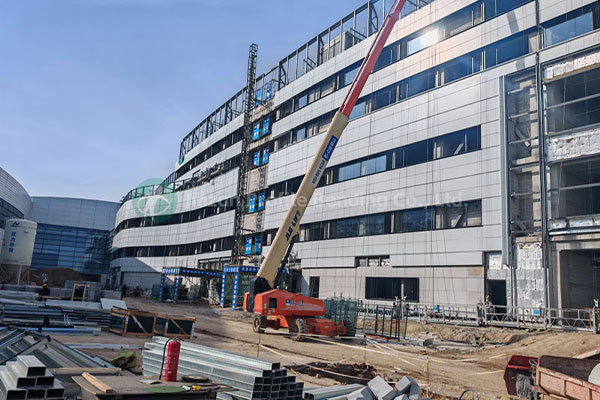
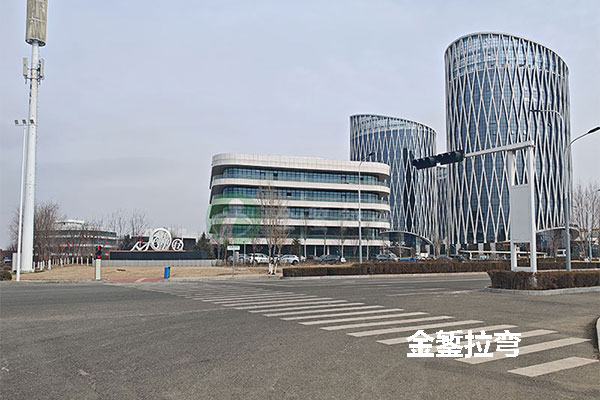
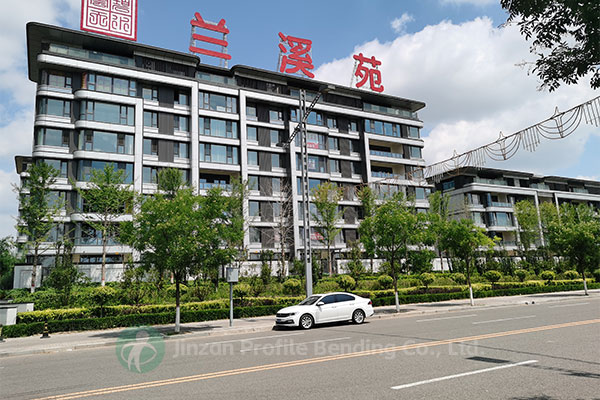
In architecture, curved aluminum, stainless steel, and steel profiles can be used for facades, roofs, railings, doors, windows, decorative structures, and interior features.
In construction, bent beams, channels, and structural sections can be incorporated into curved frameworks, bridges, canopies, and support structures.
In transportation, custom bent profiles are used for vehicle frames, rail components, trailers, protective structures, and specialized transportation equipment.
In industrial machinery, bent profiles can form machine frames, guards, supports, conveyor structures, and equipment components.
The energy sector also uses custom metal forming for equipment structures, pipelines, support systems, and other specialized components.
How to Select a Profile Bending Supplier
Choosing the right manufacturing partner is an important step in a custom bending project. A capable supplier should have suitable bending equipment, experienced technicians, and a clear understanding of different metal materials and profile geometries.
It is also useful to review the supplier’s quality control procedures. Depending on the application, dimensional inspection, surface inspection, material verification, and other quality checks may be required.
Before production, customers should provide accurate drawings or technical specifications whenever possible. Information such as material grade, profile dimensions, bending radius, bending direction, tolerances, and required quantity can help the manufacturer evaluate the project correctly.
For complex components, prototype production or sample bending can also be considered before full-scale manufacturing.
Custom Profile Bending for Complex Projects
Every bending project has its own requirements. Some applications require large-radius forming, while others involve tight curves, multiple bending directions, or unusual profile geometries.
A customized approach allows manufacturers to evaluate the profile and select an appropriate forming method rather than relying on a single standard process.
Advanced machinery, experienced operators, accurate measurement, and process optimization can work together to improve repeatability and reduce material waste.
For high-volume projects, production planning is also important. Stable tooling and standardized process parameters can help maintain consistent quality from the first piece to the last.
Profile bending provides an efficient solution for transforming standard metal sections into customized curved components. By eliminating unnecessary cutting and joining operations, it can offer greater design flexibility, improved production efficiency, and a cleaner finished structure.
The success of a custom profile bending project depends on several factors, including material selection, profile geometry, bending radius, equipment, tooling, springback compensation, and quality control.
Whether the project involves architectural structures, industrial machinery, transportation equipment, or specialized fabrication, selecting an experienced profile bending supplier can make a significant difference. With the right process and technical expertise, custom metal profiles can be formed accurately to meet demanding design and performance requirements.