 English
 Chinese
 Mongol
Redefining the construction industry with innovative solutions, cuttin-edge technology and sustainable practices
Redefining the construction industry with innovative solutions, cuttin-edge technology and sustainable practices
Profile Bending 2026-10-09
Steel is one of the most widely used materials in modern construction, manufacturing, infrastructure, and industrial engineering. Its strength, durability, and versatility make it suitable for a broad range of structural and decorative applications. However, steel components do not always need to remain straight. Many projects require curved profiles, angled sections, or customized shapes to meet specific design and performance requirements. Two common metalworking processes used to achieve these shapes are steel curving and steel bending.
Although these terms are sometimes used interchangeably, they can refer to different forming approaches depending on the material, equipment, and intended geometry. Understanding the differences between steel curving and steel bending helps engineers, contractors, manufacturers, and project managers select the most appropriate process for their applications.
1. What Is Steel Curving?
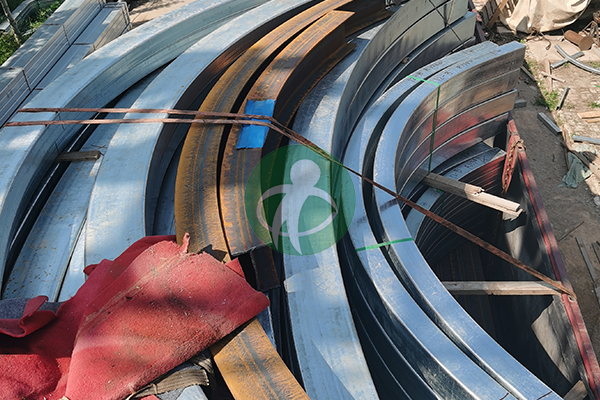
Steel curving is a metal forming process used to create smooth, continuous curves in steel sections, plates, tubes, beams, and other structural components. The process is commonly used when a project requires a large-radius arc, a circular profile, or a curved structural element that follows a specific design.
Depending on the steel section and required curvature, manufacturers may use section rolling machines, plate rolling equipment, tube bending systems, or specialized forming machinery. During the process, controlled forces gradually reshape the steel while maintaining the desired radius and profile.
Steel curving is particularly important in projects where visual appearance and structural performance must work together. For example, curved steel beams can support arched roofs, while curved steel plates can form cylindrical tanks, pressure vessels, and industrial enclosures.
Common applications of steel curving include:
Architectural structures with curved roofs and facades.
Bridges featuring curved girders and structural components.
Industrial tanks, silos, and cylindrical equipment.
Steel frames used in commercial and public buildings.
Decorative metalwork and customized architectural features.
Infrastructure projects requiring curved steel sections.
One of the main advantages of steel curving is its ability to produce smooth, consistent shapes that follow complex architectural or engineering designs. When properly planned and executed, the process can reduce the need for multiple straight components and additional connections.
2. What Is Steel Bending?
Steel bending is a metal forming process that changes the angle or shape of steel by applying force to a specific area. Unlike processes designed primarily to create long, smooth arcs, bending often produces defined angles, tighter radii, or localized changes in geometry.
Common bending methods include press brake bending, tube bending, roll bending, and mandrel bending. The appropriate method depends on the type of steel, component dimensions, material thickness, required bend radius, and production volume.
For example, a press brake can bend steel sheet into channels, brackets, enclosures, and other fabricated parts. Tube bending equipment can produce curved pipes and hollow sections for mechanical systems, vehicle frames, and industrial installations.
Steel bending is widely used in:
Sheet metal fabrication.
Steel brackets, supports, and mounting components.
Pipes, tubes, and handrails.
Automotive and machinery components.
Electrical cabinets and industrial enclosures.
Construction reinforcement and custom metal assemblies.
A major advantage of steel bending is its versatility. Manufacturers can produce a wide range of angles and profiles, often with high repeatability when using CNC-controlled equipment. This makes bending suitable for both custom fabrication and large-scale manufacturing.
3. Steel Curving vs. Steel Bending: Key Differences
Although steel curving and steel bending both involve plastic deformation, they differ in their typical objectives, forming methods, and applications.
Curvature and Geometry
The most noticeable difference is the shape each process is generally intended to produce.
Steel curving commonly creates smooth, continuous arcs over a relatively long section of material. It is often selected for large-radius curves in beams, channels, pipes, and plates.
Steel bending is frequently used to create specific angles, localized bends, and more compact geometries. However, bending can also produce smooth curves, particularly when roll bending or specialized tube bending equipment is used.
Therefore, the distinction is not absolute. The required geometry, rather than the terminology alone, should determine the forming method.
Equipment and Processing Methods
Steel curving often relies on section rollers, plate rollers, or specialized machinery capable of applying controlled deformation over a continuous length. The setup must account for the steel profile, desired radius, material thickness, and potential springback.
Steel bending may use press brakes, rotary draw bending machines, mandrel systems, or other forming equipment. A press brake is particularly effective for producing defined angles in sheet and plate materials, while tube bending machines can form pipes and hollow sections.
For projects involving large structural beams or long-radius curves, dedicated section rolling equipment may be more appropriate than conventional press brake bending.
Material Deformation and Accuracy
Both processes require careful control of material deformation. Steel may experience stretching on the outside of a curve and compression on the inside. If the forming conditions are unsuitable, defects such as wrinkling, cracking, local buckling, or cross-sectional distortion can occur.
In steel curving, maintaining a consistent radius and preserving the original cross-sectional shape are particularly important. In steel bending, dimensional accuracy at the bend location, angle control, and surface quality may be the primary concerns.
The achievable accuracy depends on material properties, tooling, equipment capability, process parameters, and inspection procedures.
Production Efficiency
Steel curving can be efficient for producing long curved members or multiple components with similar radii. Once the equipment is properly configured, the process can reduce the need for assembling numerous straight sections.
Steel bending can be more efficient for components that require defined angles, repeated bends, or relatively simple geometries. CNC bending equipment can improve consistency and reduce manual adjustments in high-volume production.
The most efficient process depends on component design, production quantity, material dimensions, and required tolerances.
4. Advantages of Steel Curving
Steel curving offers several benefits for structural and architectural applications.
Design flexibility: Curved steel components allow engineers and architects to develop distinctive structures, including arched roofs, curved facades, circular frameworks, and flowing architectural forms.
Structural continuity: A properly formed curved member may reduce the need for multiple straight segments and some associated joints. The actual structural benefits depend on the design and loading conditions.
Improved appearance: Smooth curves can create a clean, continuous appearance in visible structural elements and decorative installations.
Material utilization: When the correct forming process is selected, steel curving can help reduce cutting, fitting, and assembly work associated with constructing curved shapes from multiple straight components.
Versatility across profiles: Depending on the equipment, steel curving can be applied to beams, channels, angles, tubes, and plates of different dimensions.
For these reasons, steel curving is widely used in projects where large-radius geometry, architectural appearance, or continuous structural profiles are important.
5. Advantages of Steel Bending
Steel bending remains an essential fabrication method because of its adaptability and broad range of applications.
Precise angle formation: Modern bending equipment can produce accurate angles and repeatable geometries when material characteristics and tooling are properly controlled.
Wide application range: Steel bending is suitable for sheet metal, plates, tubes, pipes, and various fabricated components.
Efficient manufacturing: Automated bending systems can reduce manual handling and support consistent production across large batches.
Flexible customization: Manufacturers can create customized brackets, supports, frames, enclosures, and other components to meet specific project requirements.
Reduced fabrication complexity: For many parts, bending can replace assemblies made from multiple cut and welded pieces, potentially reducing welding operations and simplifying production.
When the required shape involves distinct angles or localized changes in direction, bending is often a practical and cost-effective solution.
6. Applications in Construction and Industrial Manufacturing
Steel curving and steel bending serve complementary roles across numerous industries.
Construction and Architecture
Steel curving is commonly used for arched roofs, curved beams, stadium structures, canopies, and architectural facades. These components help create distinctive designs while meeting project-specific structural requirements.
Steel bending is frequently used for connection plates, brackets, supports, metal framing, stair components, and other fabricated building elements.
Bridges and Infrastructure
Curved steel girders, rails, and other structural components may be required for bridges and infrastructure projects with complex geometries. Steel bending is also used to manufacture support elements, protective barriers, pipework, and connection components.
For load-bearing applications, engineers must verify material properties, geometry, residual stresses where relevant, and structural performance in accordance with applicable design standards.
Industrial Equipment
Steel curving is valuable for manufacturing tanks, cylindrical shells, large ducts, and curved equipment housings. Plate rolling can produce cylindrical or conical forms from flat steel plate.
Steel bending is used for pipes, tubing, machinery frames, mounting brackets, and fabricated equipment components. In piping systems, bend radius and wall thickness must be evaluated to ensure the finished component meets the applicable service requirements.
Transportation and Automotive Manufacturing
Steel bending is widely used in vehicle frames, exhaust systems, structural supports, and other components requiring repeatable shapes. Steel curving may also be used for larger tubular or structural profiles where continuous curved geometry is required.
The appropriate process depends on production volume, component geometry, material grade, and performance requirements.
7. Factors to Consider When Choosing Between Steel Curving and Steel Bending
Selecting the right process requires more than comparing equipment or production costs. Several technical factors should be evaluated before fabrication begins.
Material grade: Different steel grades have different yield strengths, ductility, and forming characteristics. High-strength steel may require different forming forces and more careful process control.
Material thickness and profile: Thick plates, structural beams, and hollow sections may require specialized equipment. The shape of the cross-section also affects the risk of distortion.
Required radius and angle: Large, continuous arcs may favor section or plate rolling, while defined angles may favor press brake bending. Tight-radius curves may require specialized tooling or multiple forming stages.
Dimensional tolerances: Projects with strict geometric requirements may require trial forming, process adjustments, measurement, and additional inspection.
Production volume: High-volume production may justify automated CNC bending equipment or dedicated tooling, while large one-off structural components may be better suited to specialized rolling services.
Surface finish: Visible architectural components may require additional attention to surface protection, coating compatibility, and cosmetic quality.
Total project cost: Cost comparisons should include setup, tooling, material handling, inspection, transportation, and any additional fabrication or assembly work.
Discussing these factors with an experienced steel fabrication provider can help identify the most appropriate and economical manufacturing approach.
8. Quality Control in Steel Curving and Steel Bending
Quality control is essential because forming errors can affect both the appearance and performance of finished steel components.
Before fabrication, manufacturers should review engineering drawings, material specifications, required dimensions, and applicable standards. Material certificates may also be necessary for projects with specific traceability requirements.
During forming, operators should monitor the forming process and account for springback, which occurs when steel partially returns toward its original shape after the applied force is removed. Trial pieces and process adjustments may be necessary to achieve the required final geometry.
After forming, inspection may include checking bend angles, curve radii, overall dimensions, cross-sectional distortion, surface condition, and visible defects. Depending on the component and its intended service, additional testing or inspection may be required.
For structural and pressure-related applications, quality requirements should be established in accordance with the relevant engineering specifications and regulatory standards. Proper documentation and traceability can further support consistent production and project compliance.
Steel curving and steel bending are both important metal forming processes, but they are generally used to achieve different types of geometry. Steel curving is often preferred for smooth, continuous arcs and large-radius structural profiles, while steel bending is commonly used for defined angles, localized deformation, and customized fabricated components.
Neither process is universally better than the other. The right choice depends on the required shape, material grade, thickness, dimensional tolerances, production volume, and final application.
For construction, infrastructure, industrial manufacturing, and architectural projects, understanding these differences can help reduce fabrication complexity, improve dimensional accuracy, and manage overall project costs. By evaluating design requirements early and working with qualified steel forming specialists, businesses can select a suitable manufacturing process and achieve reliable, high-quality steel components for their specific applications.