 English
 Chinese
 Mongol
Redefining the construction industry with innovative solutions, cuttin-edge technology and sustainable practices
Redefining the construction industry with innovative solutions, cuttin-edge technology and sustainable practices
Profile Bending 2026-03-23
Custom steel curving services play a crucial role in modern manufacturing, construction, and architectural design. As industries increasingly demand complex geometries and high-performance materials, the ability to precisely curve steel components has become a key capability. From structural frameworks to decorative elements, steel curving combines engineering accuracy with practical functionality. This article explores the core processes, precision standards, and quality control measures involved in custom steel curving services.
1. Overview of Custom Steel Curving
Custom steel curving refers to the process of bending steel profiles, plates, tubes, or beams into specific shapes according to project requirements. Unlike standard bending, custom curving focuses on non-linear forms such as arcs, spirals, and complex radii. These curved components are widely used in industries such as construction, transportation, energy, and infrastructure.
The goal of custom steel curving is not only to achieve the desired shape but also to maintain the structural integrity and mechanical properties of the material. This requires a combination of advanced equipment, skilled technicians, and precise planning.
2. Key Steel Curving Processes
Several methods are used in custom steel curving, depending on the material type, thickness, and required curvature:
a. Roll Bending
Roll bending is one of the most common techniques, where steel is passed through a set of rollers to gradually form a curved shape. It is ideal for large-radius curves and is widely used for beams, pipes, and sheets.
b. Press Bending
Press bending uses a hydraulic press and die to apply force at specific points. This method is suitable for tighter radii and more controlled bends but may require multiple steps for complex shapes.
c. Induction Bending
In this process, steel is heated locally using induction coils and then bent to the desired angle. It is often used for thick pipes and structural components, as it reduces internal stress and deformation.
d. Stretch Forming
Stretch forming involves clamping the steel and stretching it over a die to achieve smooth, consistent curves. This method is commonly used in aerospace and architectural applications.
Each method has its advantages and limitations, and selecting the right process depends on the project’s technical requirements.
3. Precision Standards in Steel Curving
Precision is a critical factor in custom steel curving, especially for structural and high-visibility applications. Maintaining tight tolerances ensures proper fit, alignment, and performance.
Key precision considerations include:
Radius Accuracy: The curvature must match design specifications exactly, especially for components that need to align with other parts.
Dimensional Tolerances: Length, angle, and cross-sectional integrity must remain within acceptable limits.
Springback Compensation: Steel tends to partially return to its original shape after bending. Accurate calculations and adjustments are necessary to counteract this effect.
Surface Integrity: The bending process should not cause cracks, wrinkles, or excessive deformation on the surface.
Advanced technologies such as CNC-controlled machinery and 3D measurement systems are often used to achieve these precision standards.
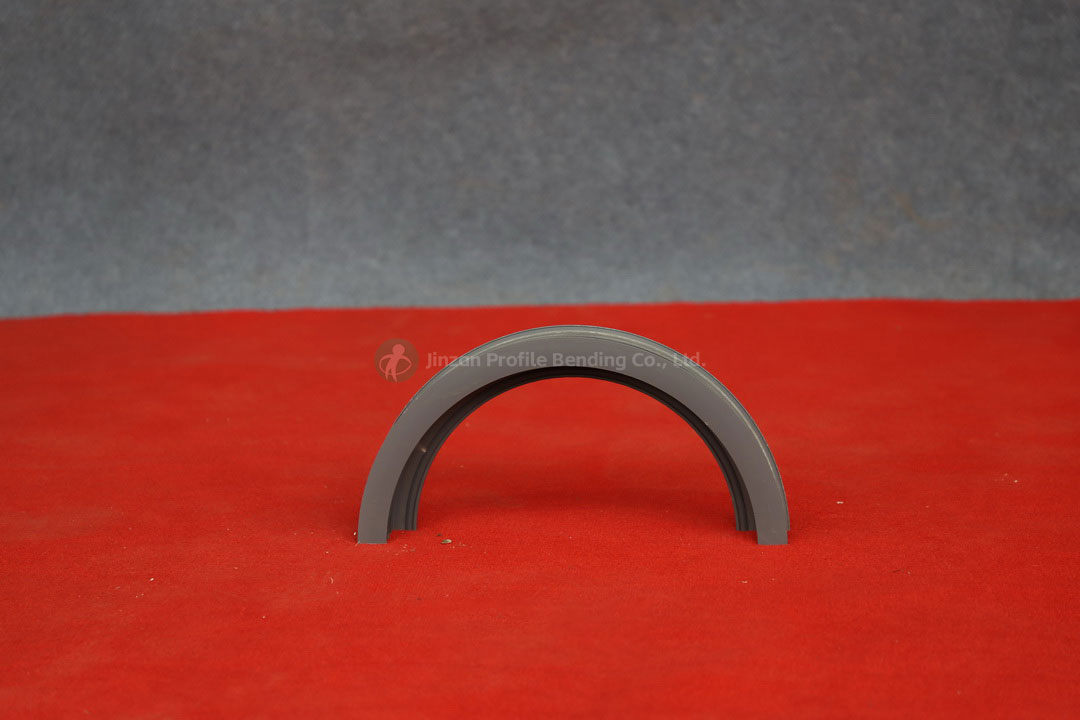
4. Quality Control Measures
Ensuring consistent quality in steel curving requires a comprehensive quality control system throughout the production process:
a. Material Inspection
Before processing, raw materials are inspected for defects, composition, and mechanical properties. Only materials that meet specifications are approved for use.
b. Process Monitoring
During curving, parameters such as pressure, temperature, and bending speed are closely monitored. This helps maintain consistency and prevent errors.
c. Dimensional Verification
After bending, components are measured using tools such as templates, laser scanners, or coordinate measuring machines (CMM). This ensures compliance with design specifications.
d. Non-Destructive Testing (NDT)
Techniques like ultrasonic testing or magnetic particle inspection may be used to detect internal flaws without damaging the material.
e. Final Inspection and Documentation
A final quality check is conducted before delivery, and detailed reports are provided to ensure traceability and accountability.
5. Applications of Custom Steel Curving
Custom steel curving is widely used across various industries:
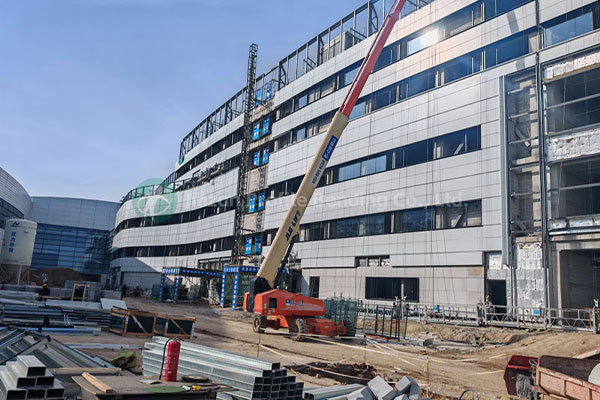
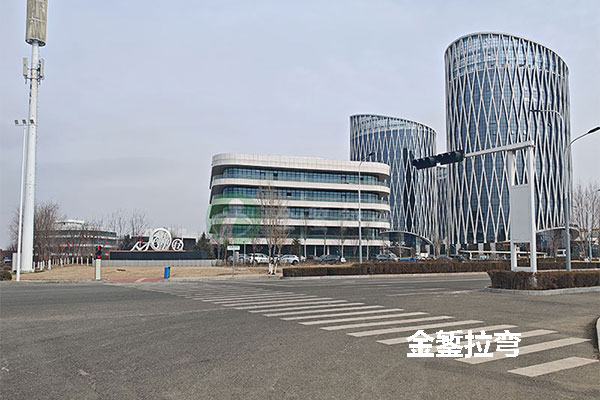
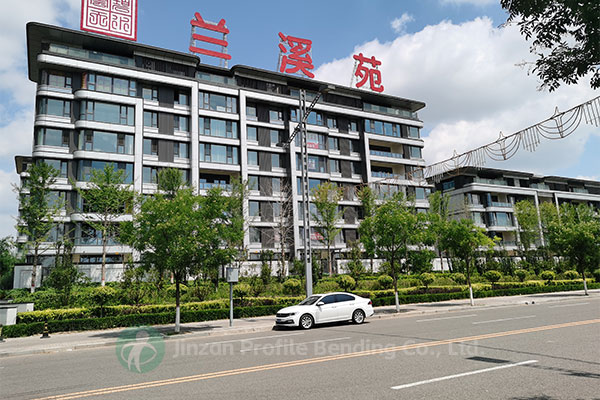
Construction: Curved beams, arches, and facades in modern buildings.
Infrastructure: Bridges, tunnels, and rail systems requiring precise curved components.
Energy Sector: Pipelines and structural supports in oil, gas, and renewable energy projects.
Architecture: Decorative metalwork and complex design elements.
These applications highlight the importance of combining accuracy with durability.
6. Challenges and Solutions
Despite its advantages, steel curving presents several challenges:
Material Deformation: Improper handling can lead to distortion. Solution: use controlled processes and proper tooling.
Complex Geometry: Multi-radius or asymmetrical shapes require advanced planning. Solution: utilize CAD/CAM software and simulation tools.
Consistency in Mass Production: Maintaining uniformity across batches can be difficult. Solution: implement automated systems and strict quality protocols.
Custom steel curving services are an essential part of modern engineering and design. By combining advanced bending processes with strict precision standards and robust quality control measures, manufacturers can produce high-quality curved steel components that meet diverse industrial needs. As technology continues to evolve, the capabilities of steel curving will expand further, enabling even more innovative and efficient applications in the future.