 English
 Chinese
 Mongol
Redefining the construction industry with innovative solutions, cuttin-edge technology and sustainable practices
Redefining the construction industry with innovative solutions, cuttin-edge technology and sustainable practices
Profile Bending 2026-04-01
In today’s modern manufacturing and architectural landscape, stainless steel stretch bending has become an essential process for creating high-quality curved components with precision, strength, and aesthetic appeal. From complex architectural facades to industrial structural elements, professional stretch bending solutions provide a seamless transition from initial design concepts to final production. This integrated approach ensures efficiency, consistency, and superior product performance.
Understanding Stainless Steel Stretch Bending
Stretch bending is a specialized metal forming process in which a stainless steel profile is simultaneously stretched and bent over a die to achieve a desired curvature. Unlike conventional bending methods, this technique applies controlled tensile force, minimizing internal stress imbalances and reducing common defects such as wrinkling, buckling, or excessive springback. As a result, the final product maintains high dimensional accuracy and a smooth, uniform surface.
This process is particularly suitable for stainless steel due to its strength, corrosion resistance, and versatility. Whether working with tubes, profiles, or sheets, stretch bending allows manufacturers to achieve complex geometries that would be difficult or impossible with standard bending techniques.
From Design to Engineering: The Foundation of Precision
A successful stretch bending project begins with a well-defined design phase. Engineers collaborate closely with clients to understand the functional requirements, load conditions, and aesthetic expectations of the final product. Advanced CAD (Computer-Aided Design) software is used to create detailed models, allowing for precise visualization of curves, radii, and tolerances.
During this stage, material properties such as thickness, grade, and elasticity are carefully analyzed. This ensures that the chosen stainless steel type—whether 304, 316, or other alloys—meets both structural and environmental requirements. Simulation tools may also be employed to predict deformation behavior and optimize bending parameters before actual production begins.
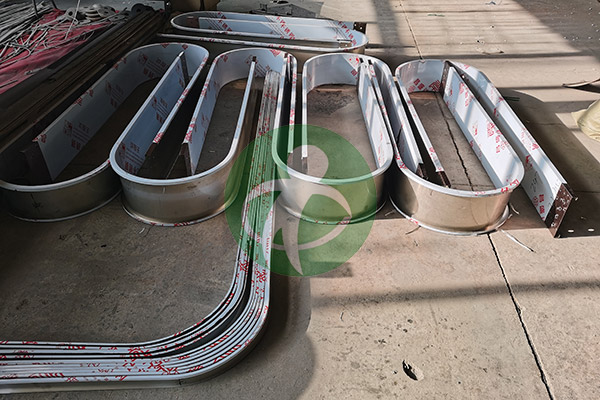
Tooling and Process Setup
Once the design is finalized, custom tooling and dies are developed to match the required curvature. The accuracy of these tools directly impacts the quality of the finished product. High-quality molds, combined with CNC-controlled stretch bending machines, enable precise force application and repeatable results.
Process parameters such as stretching force, bending speed, and clamping conditions are calibrated to suit the specific material and geometry. This level of control ensures that each component is formed consistently, even in large production batches.
Production and Quality Control
During production, stainless steel components are securely clamped and gradually stretched while being formed over the die. The controlled process minimizes distortion and preserves the material’s structural integrity. For projects requiring tight tolerances or complex multi-radius curves, multiple stages of bending and verification may be applied.
Quality control is a critical part of professional stretch bending solutions. Each component undergoes inspection to verify dimensions, curvature accuracy, and surface condition. Advanced measuring tools, including laser scanners and coordinate measuring machines (CMM), are often used to ensure compliance with design specifications.
Surface Finish and Post-Processing
One of the key advantages of stretch bending is its ability to maintain excellent surface quality. However, depending on project requirements, additional finishing processes such as polishing, brushing, or coating may be applied. These treatments enhance corrosion resistance and improve visual appeal, making the components suitable for both functional and decorative applications.
Applications Across Industries
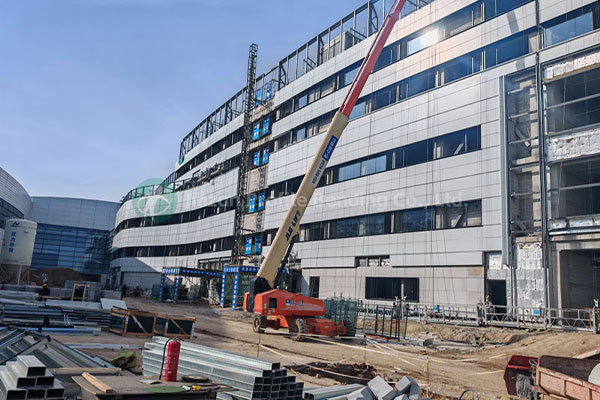
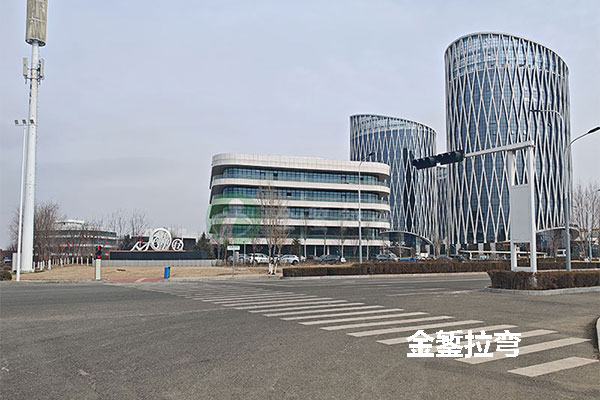
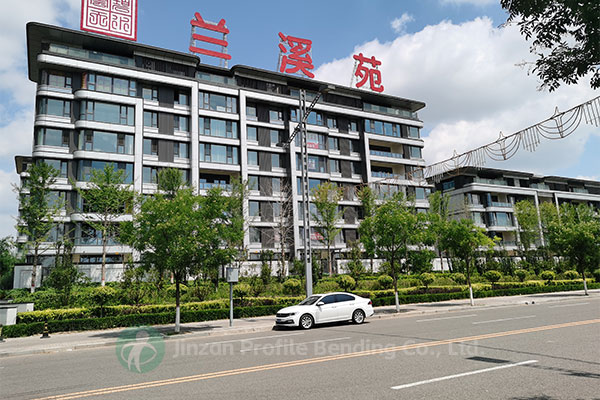
Stainless steel stretch bending is widely used across various industries. In architecture, it enables the creation of curved facades, handrails, and decorative elements that define modern building aesthetics. In transportation, it is used for structural components in rail systems and vehicles. Industrial sectors rely on stretch bending for frames, supports, and equipment parts that require both strength and precision.
Its versatility also extends to furniture design, art installations, and marine engineering, where durability and resistance to harsh environments are essential.
Efficiency, Cost, and Sustainability
Professional stretch bending solutions are designed to optimize both time and cost. By reducing material waste and minimizing the need for secondary processing, manufacturers can achieve higher efficiency and lower overall production costs. Additionally, the durability of stainless steel contributes to long product lifecycles, reducing maintenance and replacement needs.
From a sustainability perspective, stainless steel is fully recyclable, and efficient forming processes further support environmentally responsible manufacturing practices.
From initial design and engineering to final production and quality assurance, professional stainless steel stretch bending solutions offer a comprehensive approach to modern fabrication challenges. By combining advanced technology, skilled expertise, and precise process control, manufacturers can deliver components that meet the highest standards of performance and aesthetics.