 English
 Chinese
 Mongol
Redefining the construction industry with innovative solutions, cuttin-edge technology and sustainable practices
Redefining the construction industry with innovative solutions, cuttin-edge technology and sustainable practices
Profile Bending 2026-06-11
Metal bending is one of the most important processes in modern manufacturing and fabrication. From automotive components and aerospace structures to construction materials and consumer products, bent metal parts are used in countless applications across industries. As manufacturing standards continue to rise, businesses increasingly rely on professional metal bending services to produce components with exceptional accuracy, consistency, and durability.
Precision metal bending does more than simply shape metal sheets or tubes. It plays a critical role in ensuring product quality, improving structural integrity, reducing waste, and enhancing overall production efficiency. Understanding how metal bending services work and the benefits they provide can help manufacturers make informed decisions when selecting fabrication solutions.
What Is Metal Bending?
Metal bending is a fabrication process that deforms metal into a desired angle or shape without removing material. Unlike cutting or machining, bending changes the geometry of the metal while maintaining its overall strength and continuity.
The process is commonly performed using specialized equipment such as press brakes, CNC bending machines, tube benders, and roll forming systems. Depending on the project requirements, metal bending can create simple angles, complex curves, channels, brackets, enclosures, frames, and custom structural components.
Materials commonly used in metal bending include:
Stainless steel
Carbon steel
Aluminum
Copper
Brass
Galvanized steel
Each material has unique properties that influence bending performance, springback behavior, and final product quality.
The Importance of Precision in Metal Bending
Precision is a key factor in metal fabrication. Even small dimensional errors can affect assembly, performance, and product reliability. Precision metal bending ensures that every component meets exact specifications and maintains consistency throughout production runs.
Modern CNC bending technology allows manufacturers to achieve highly accurate bend angles, tight tolerances, and repeatable results. This level of precision is especially important in industries where safety, performance, and quality standards are strict.
For example, in the aerospace industry, a minor deviation in a structural component may impact aerodynamic performance. In automotive manufacturing, improperly bent parts can create assembly challenges and affect vehicle safety. Precision bending helps eliminate these risks by producing components that fit and function exactly as intended.
Enhanced Dimensional Accuracy
One of the primary benefits of professional metal bending services is improved dimensional accuracy. Advanced bending equipment uses computer-controlled systems to ensure each bend is performed according to design specifications.
Accurate dimensions help manufacturers:
Simplify assembly processes
Reduce fitting issues
Maintain product consistency
Improve overall manufacturing efficiency
When parts fit correctly the first time, production delays and costly adjustments can be minimized.
Improved Structural Strength
Proper bending techniques preserve the integrity of the metal while creating the required shape. Unlike joining multiple pieces through welding or fastening, a single bent component often provides greater structural strength and durability.
By reducing the number of joints and connections, manufacturers can create products that are more resistant to vibration, stress, and long-term wear.
This advantage is particularly valuable in industries such as construction, transportation, heavy equipment manufacturing, and industrial machinery.
Better Surface Quality
Precision metal bending minimizes surface damage during fabrication. Modern tooling and carefully controlled bending processes help prevent scratches, cracks, deformation, and material fatigue.
Maintaining a high-quality surface finish is essential for products that require:
Corrosion resistance
Decorative appearance
Protective coatings
Additional finishing processes
A clean and uniform surface contributes to both product performance and visual appeal.
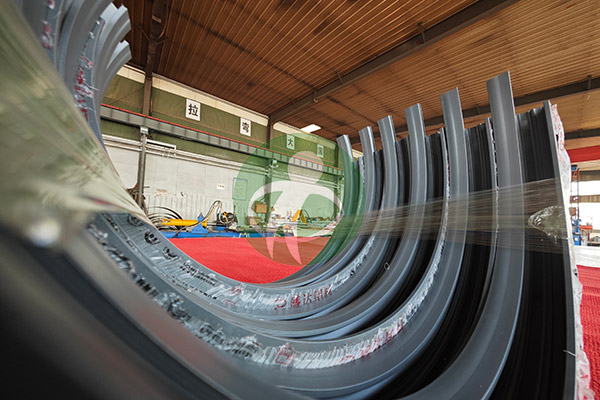
Consistent Production Results
Consistency is critical in high-volume manufacturing. Professional metal bending services utilize automated equipment and quality control procedures to ensure every part meets the same specifications.
Consistent production offers several advantages:
Reliable product performance
Reduced rejection rates
Simplified inventory management
Improved customer satisfaction
Manufacturers can confidently scale production while maintaining quality standards.
Advanced Technologies Used in Metal Bending
The metal bending industry has evolved significantly with the introduction of advanced manufacturing technologies.
Computer Numerical Control (CNC) press brakes allow operators to program precise bending sequences. These systems automatically control bend angles, back gauges, and tooling positions, resulting in exceptional accuracy and repeatability.
Specialized tube bending equipment enables manufacturers to create complex shapes without compromising material strength. This process is widely used in automotive exhaust systems, medical devices, furniture, and fluid transport systems.
Roll bending machines produce large-radius curves and cylindrical shapes. This method is commonly used in architectural structures, tanks, pipelines, and industrial equipment.
Many fabrication facilities now incorporate digital measurement systems and automated inspection tools to verify dimensional accuracy throughout production. These technologies help identify potential issues before products move to the next manufacturing stage.
Metal bending is a vital process across numerous industries.
Automotive manufacturers use bent metal components in chassis structures, brackets, frames, exhaust systems, and safety features. Precision bending supports both vehicle performance and production efficiency.
Aircraft and aerospace equipment require lightweight, high-strength components manufactured to extremely tight tolerances. Precision metal bending helps meet these demanding requirements.
Structural supports, handrails, roofing systems, framing components, and architectural features often rely on custom metal bending solutions.
Metal enclosures, cabinets, mounting brackets, and equipment housings require precise bending to ensure proper fit and protection of internal components.
Machinery, production equipment, storage systems, and heavy-duty structures frequently incorporate custom-bent metal parts designed for specific applications.
Choosing the Right Metal Bending Service Provider
Selecting an experienced metal bending company is essential for achieving high-quality results. Manufacturers should evaluate several factors when choosing a service provider.
Key considerations include:
Industry experience
Advanced CNC equipment
Material expertise
Quality control procedures
Production capacity
Customization capabilities
Delivery reliability
A reputable fabrication partner can help optimize designs, reduce production costs, and ensure consistent product quality throughout the manufacturing process.
Precision metal bending is far more than a simple shaping operation. It is a critical manufacturing process that directly influences product quality, structural integrity, dimensional accuracy, and overall performance. By utilizing advanced bending technologies and professional fabrication expertise, manufacturers can produce reliable, high-quality components that meet the demands of modern industries.
Whether for automotive parts, aerospace assemblies, construction projects, or custom industrial applications, professional metal bending services provide the precision and consistency needed to support efficient production and long-term product success. As manufacturing continues to evolve, precision forming will remain a key factor in delivering superior products and maintaining a competitive advantage in the global marketplace.